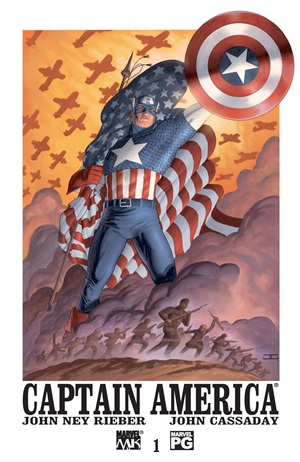
 This issue launches the fourth volume of Captain America, this one under the Marvel Knights imprint, which by this point had already featured groundbreaking re-imaginings of Daredevil and Black Panther. The intent was to ground the stories of Captain America more firmly in the real world—and nothing was more current in the United States of early 2002 than terrorism, with the wounds of September 11, 2001, still very fresh. This focus extended to the Marvel Universe as well, as we will see for most of this first issue until the time jumps ahead several months to another terrorist attack. Both incidents force Cap to confront a new type of warfare as well as the wrongs done by his own country—and perhaps those he has done as well (at least as he perceives them).
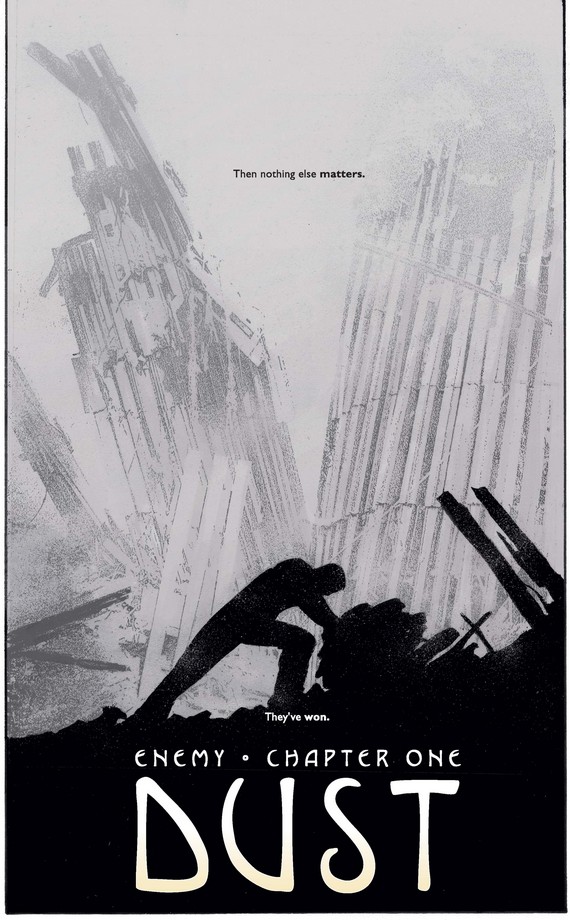
When first we see our hero, he is just one person among many, searching the wreckage of the Twin Towers for survivors while trying to stay positive…
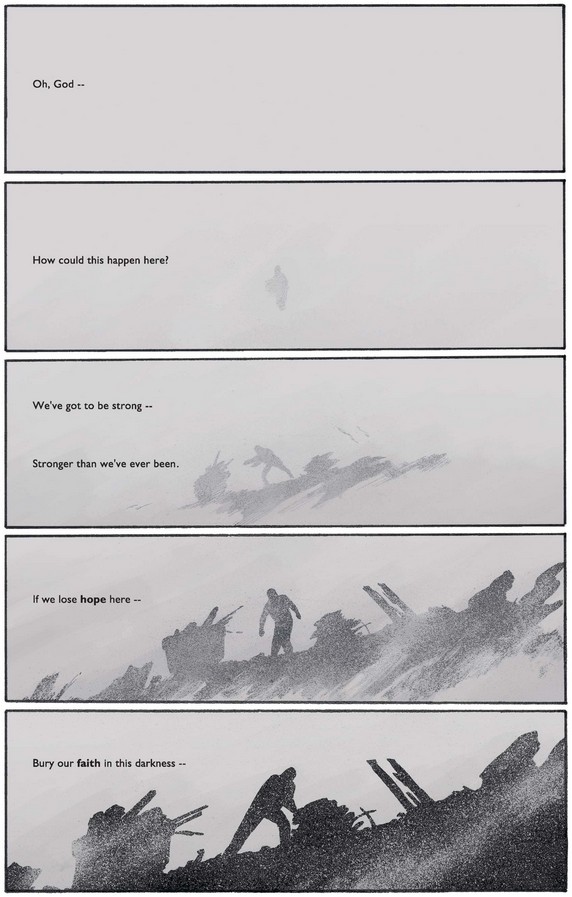
…for that was not only all we could do in that moment, but it was the most important thing to do as well.
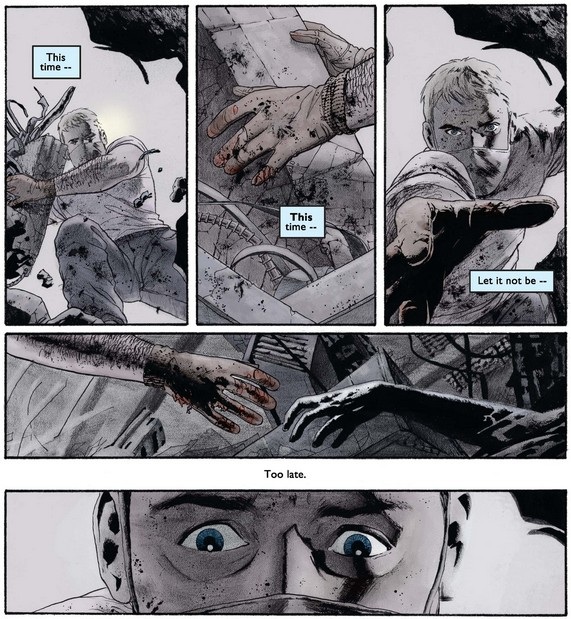
At long last he thinks he has found someone alive, but it is not to be.
When another first responder—another hero, just as in our world—recommends that Steve rest, he refuses. When the other man asks Steve where he was when the Towers fell, he doesn’t realize how hard the question is going to affect the man whose sole mission is to protect his country, its people, and its dream.
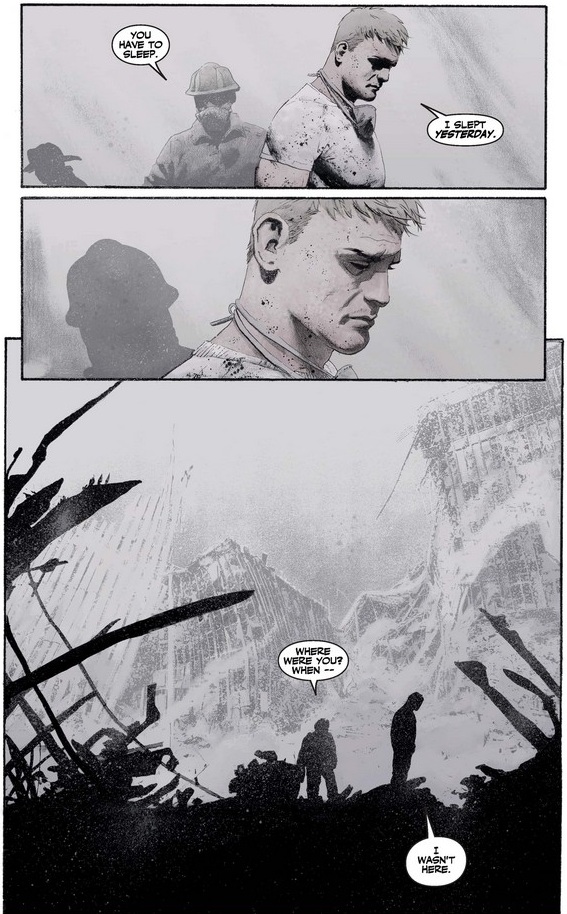
Nonetheless, Steve tells his story from that Tuesday morning, ending very poignantly, and earning a hand on his shoulder from someone who understands.
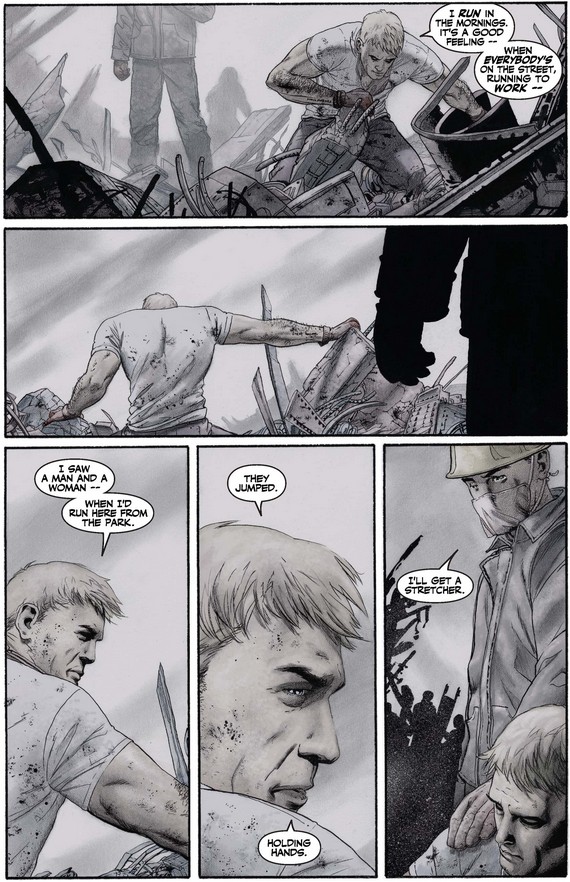
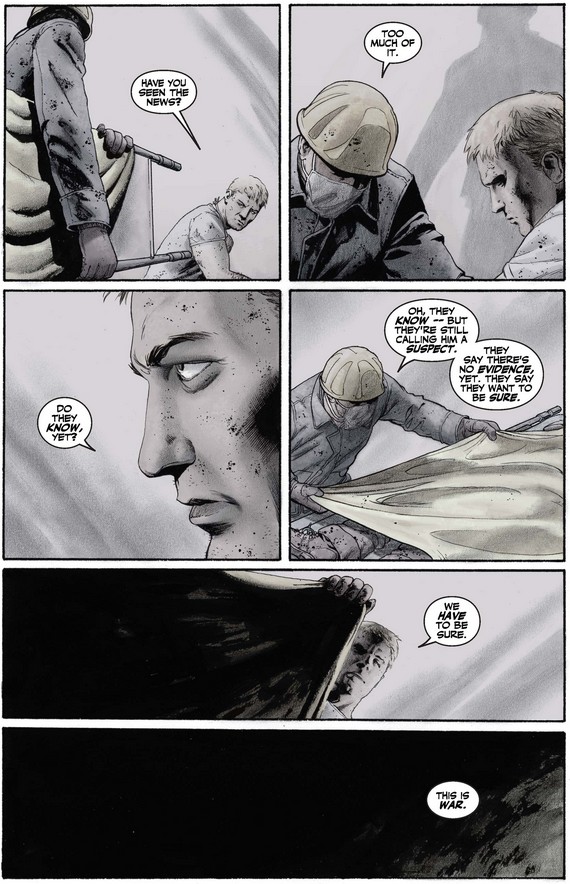
Their conversation turns to the man responsible (not mentioned here by name), and Steve confirms the stakes of knowing with certainty before reacting to the situation they find themselves in.
The next double-page spread sees Steve continue searching while his inner monologue speaks to the terrorists themselves, words on which we zoom in below.
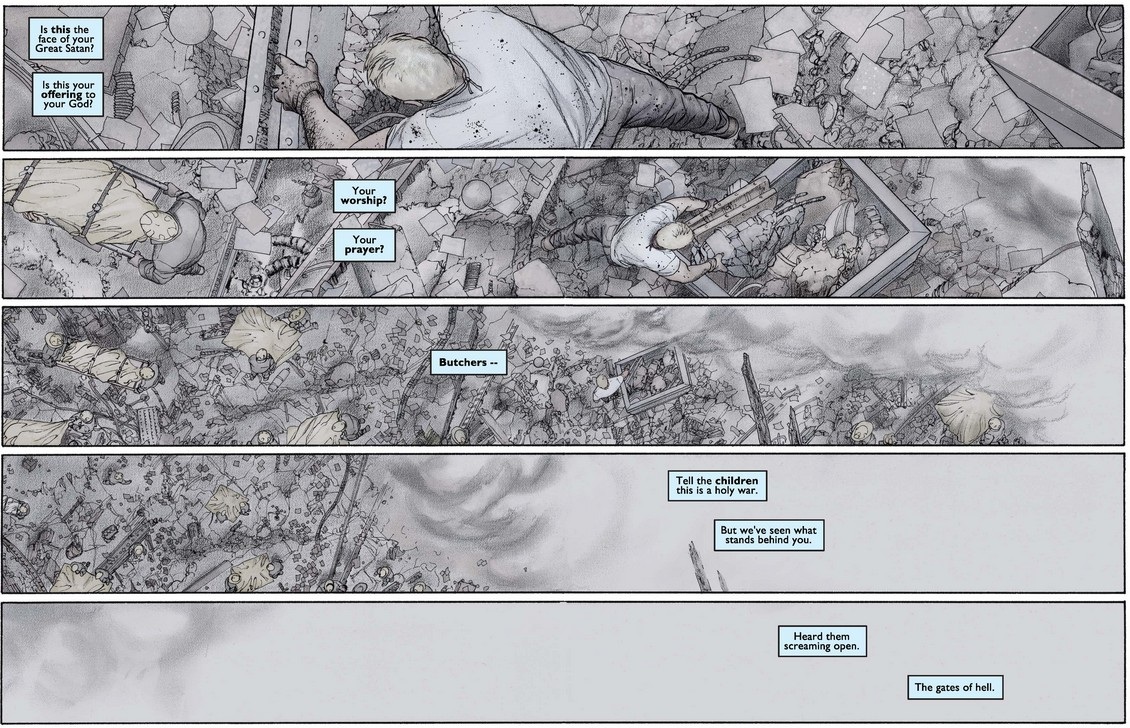
He questions the “sacred purpose” of what they did…
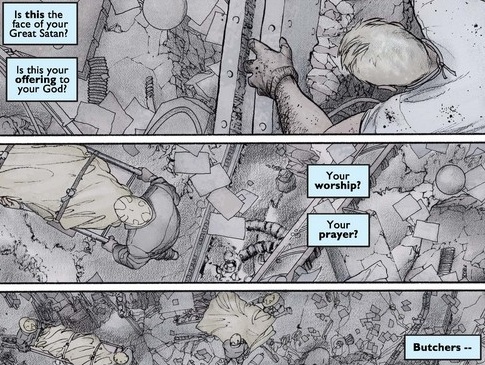
…which reveals the exact opposite.
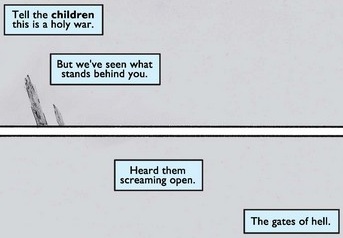
Speaking of hell, one of its representatives on Earth shows up with a shield and a mission to summon Captain America to action.
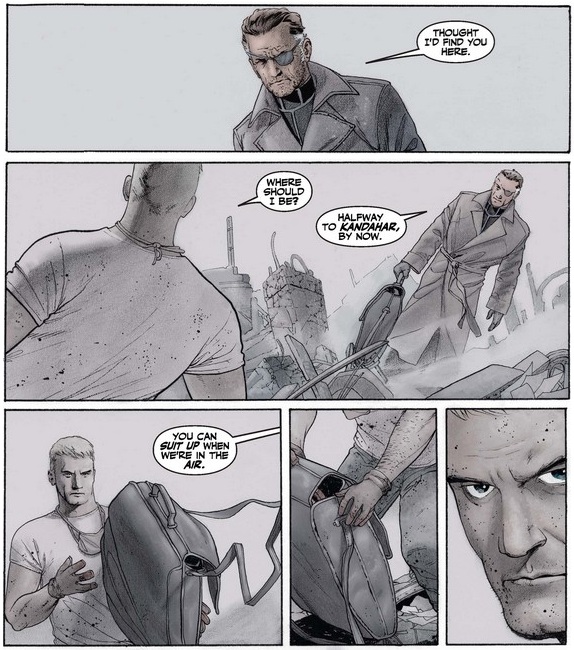
Steve is slow to respond…
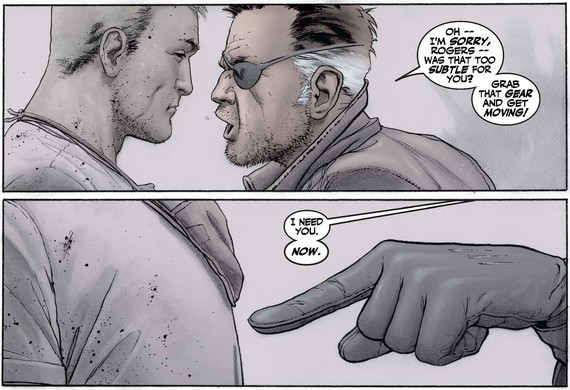
…but when he finally does, he tells Nick he’s currently serving his true mission, which is more important than retribution.
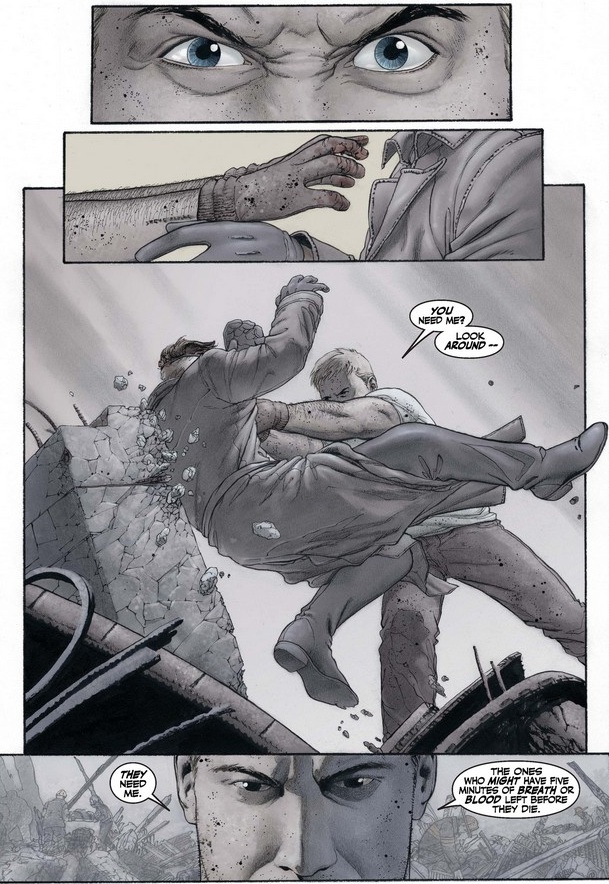
Although he sarcastically tells Nick to “go be a hero,” we know that word describes what Steve and the rest of the first responders were doing as well—and it seems Nick might get that too.
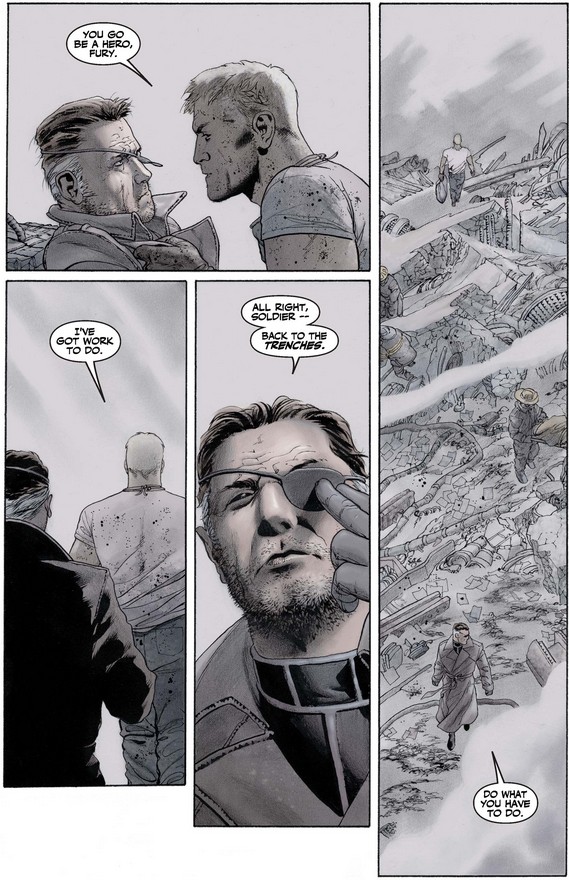
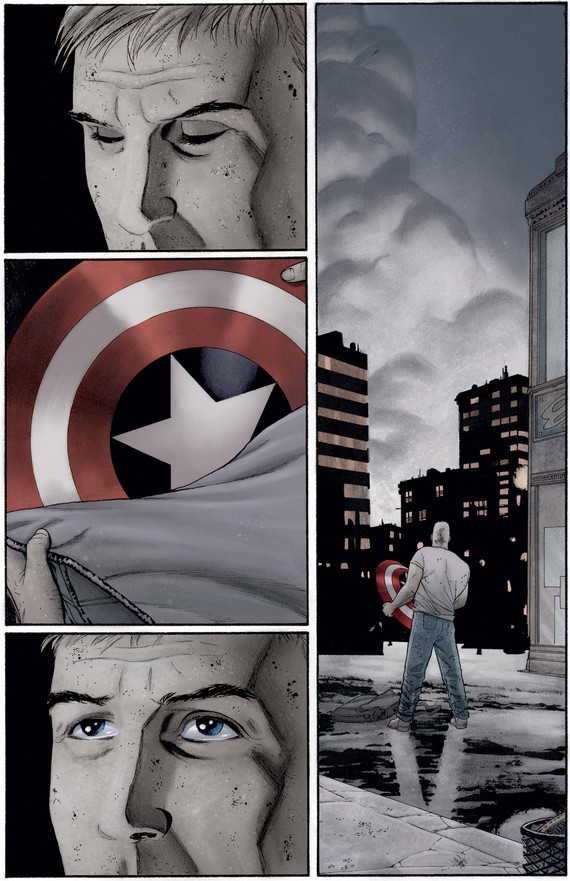
When he finally heads home, Steve recalls a feeling all too familiar to those of us who remember that day…
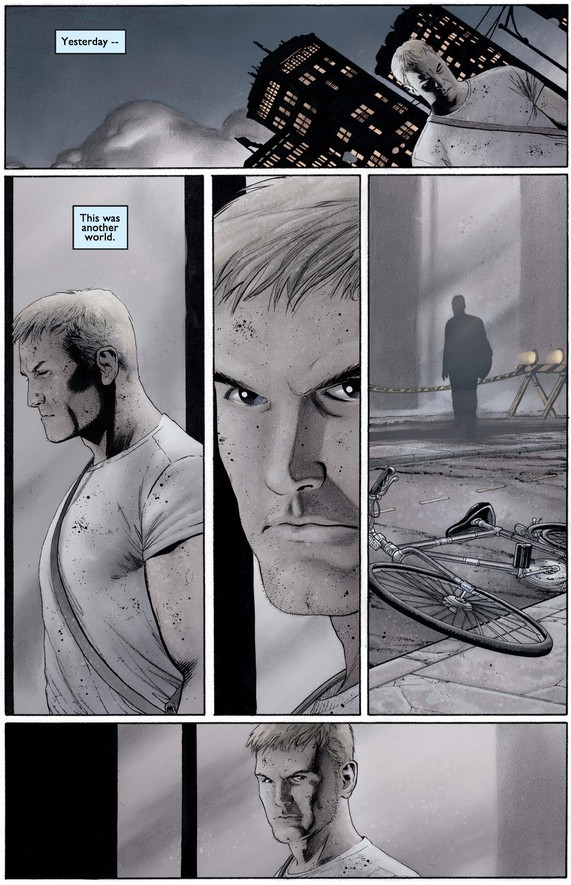
…and how different the world felt from just one day earlier.
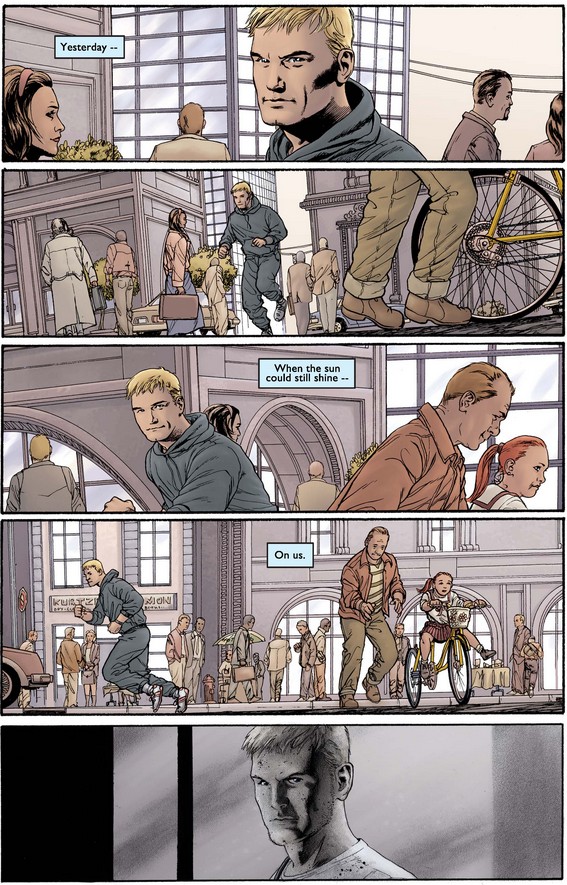
What is Steve thinking below as he looks at the shield and then the smoldering wreckage? Perhaps he’s asking himself if he could have done more, what he would have done had he been there, and most important, what he should do now.
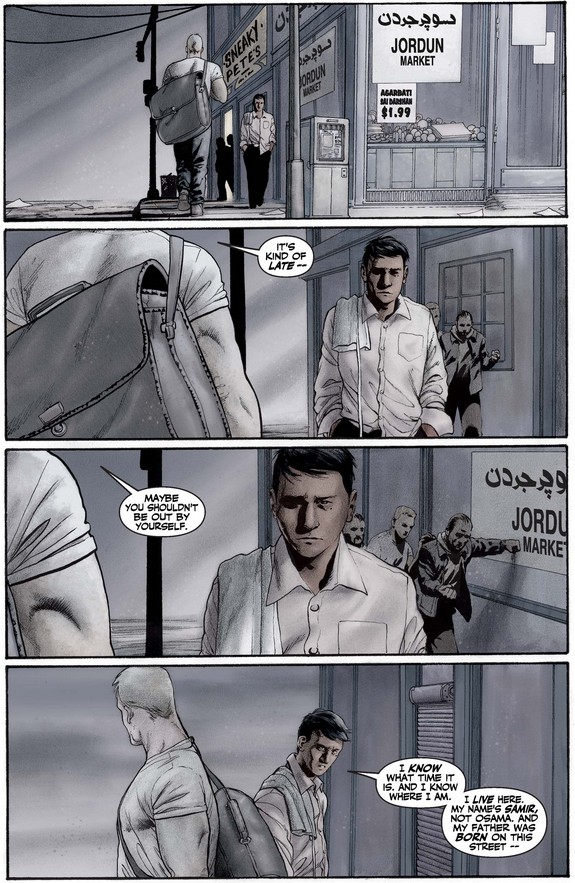
Later, he encounters a man of Middle Eastern descent and recommends he be careful, all too aware of the likely reactions of some to anyone who looks like “someone.” The man correctly asserts his right to walk the streets as comfortably as he did yesterday…
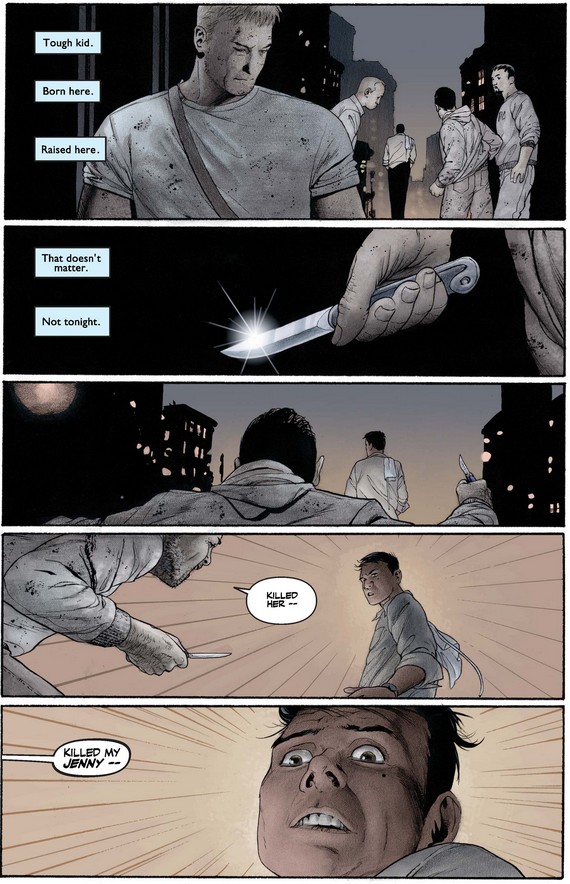
…which Steve admires, but watches as his worst suspicions come true.
As he blocks the knife with his shield, Steve reiterates what all Americans need to do to prevail in the war for minds, hearts, and souls.
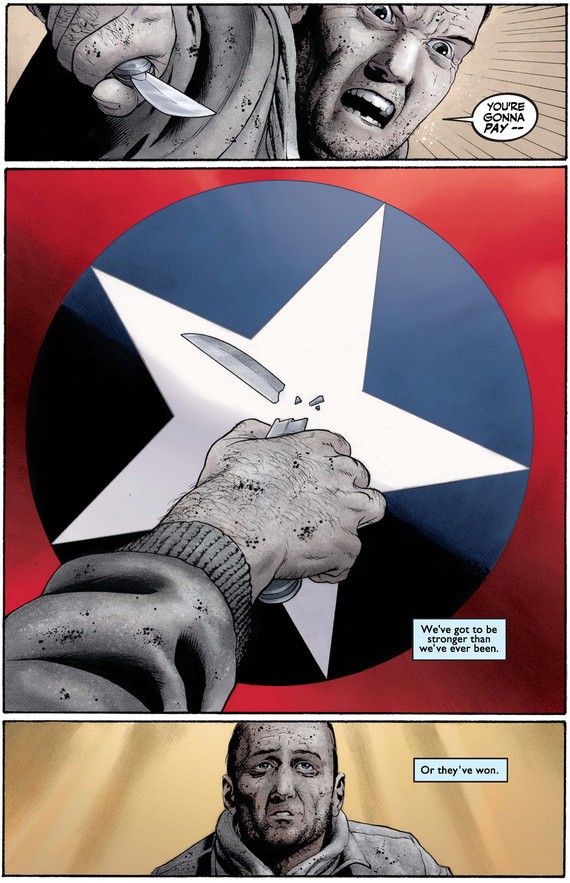
Did I sat Steve? I meant Captain America, gloriously backlit while silently expanding on his theme.
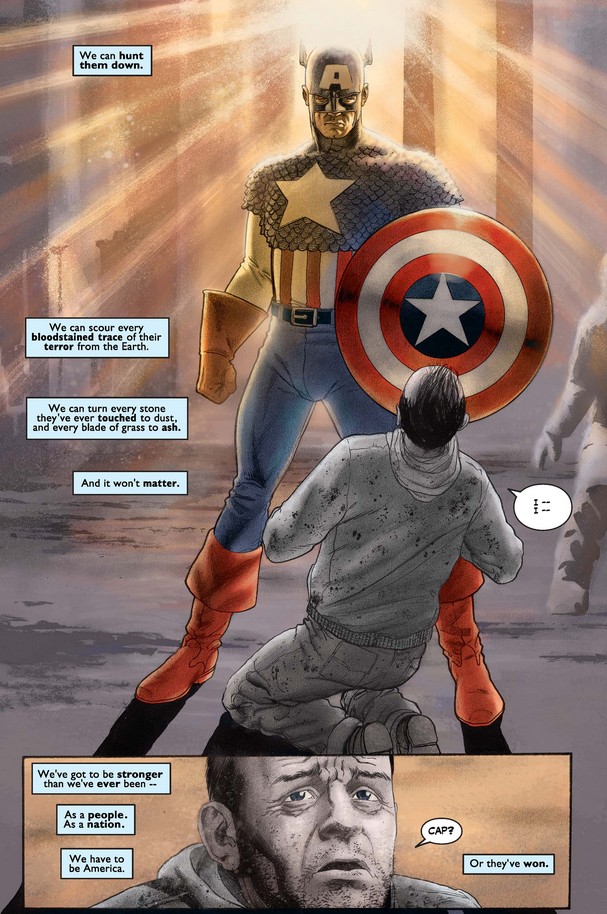
(Let me pause to note the art of John Cassaday, born just two weeks earlier than me and gone far too soon, having passed in 2024. Among his numerous other accolades, he’s the artist credited with drawing Cap’s chain mail with such detail, enhancing the realistic approach of this run and influencing many of the depictions of the Sentinel of Liberty going forward.)
Cap acknowledges the attacker’s pain and hunger for justice, but recommends a more appropriate target for his righteous anger.
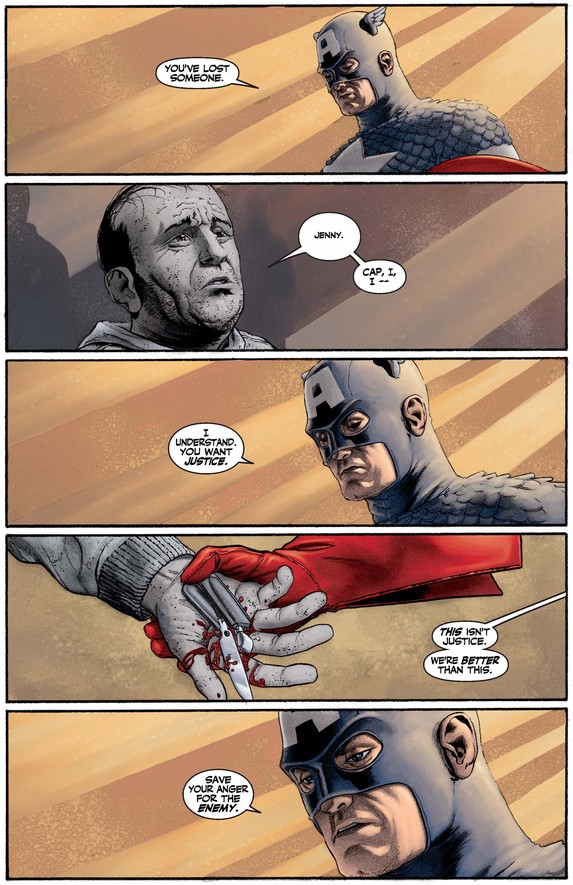
Even more touching, the first man asks Cap to go easy on his attacker, to whom he reaches out in sympathy, which gives Cap a little bit of hope that they can rise above the impulse for revenge and pursue justice instead.
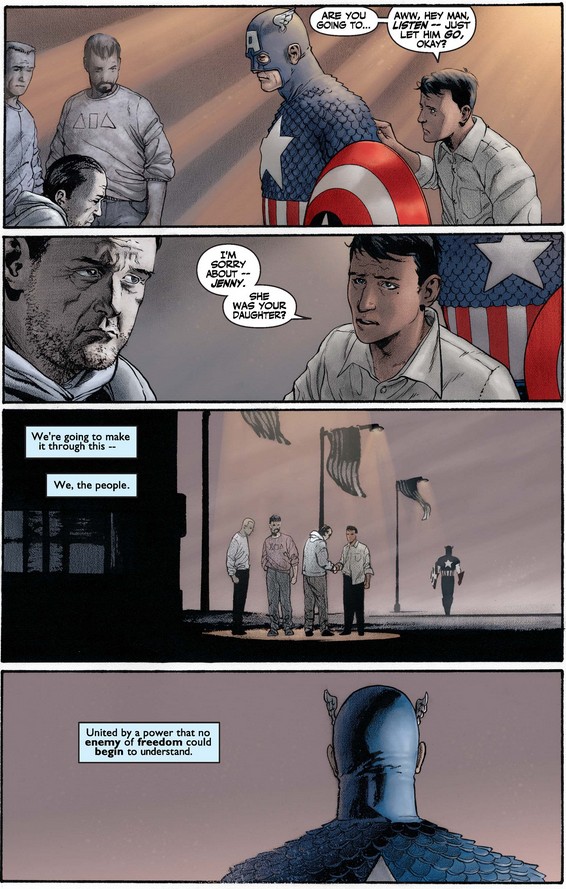
We get one last beautiful portrait of Captain America asserting what American need to stand behind as they mourn and prepare for next steps…
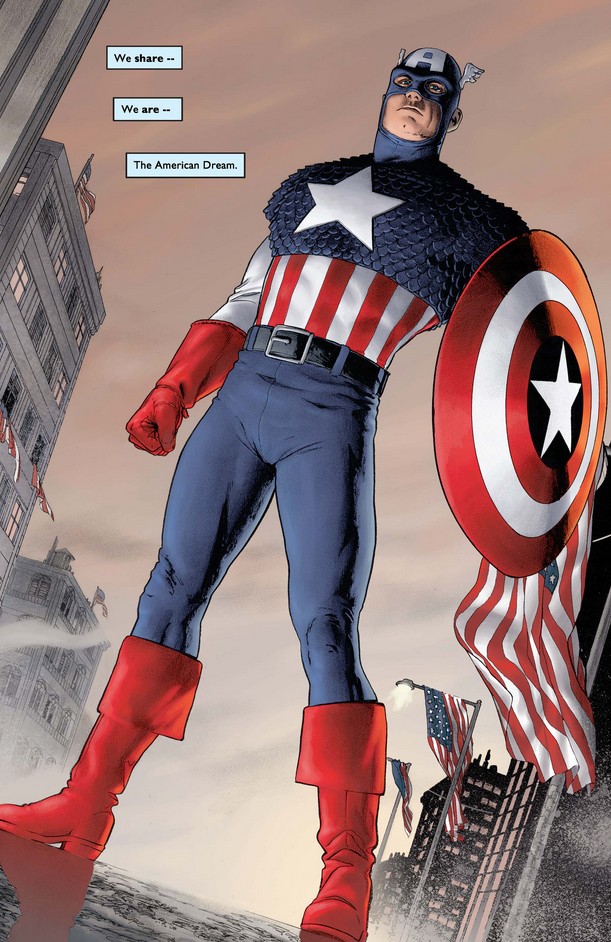
…before the story jumps seven months ahead to April 2002 (when this comic was released, natch). There is another terrorist attack, this one on Easter Sunday, involving countless small explosives airdropped by a man named al-Tariq over Centerville, a town of 600 somewhere in America, many of whom are being held hostage.
After Nick briefs Cap on some new equipment…
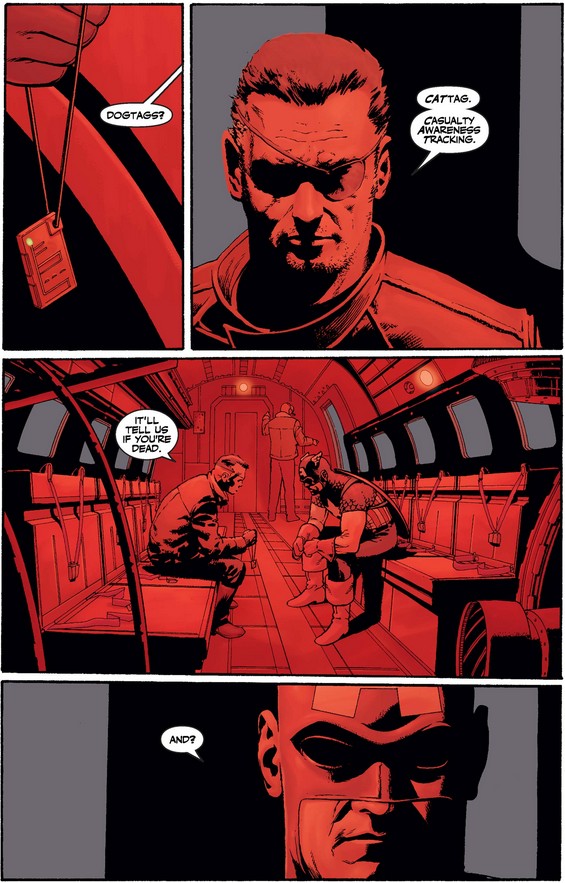
…he makes clear the mission and the nature of the threat.
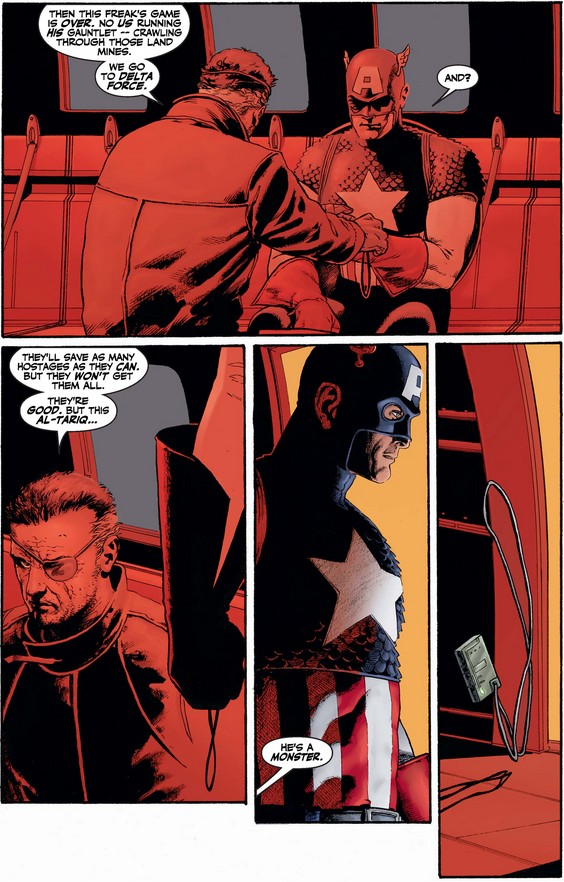
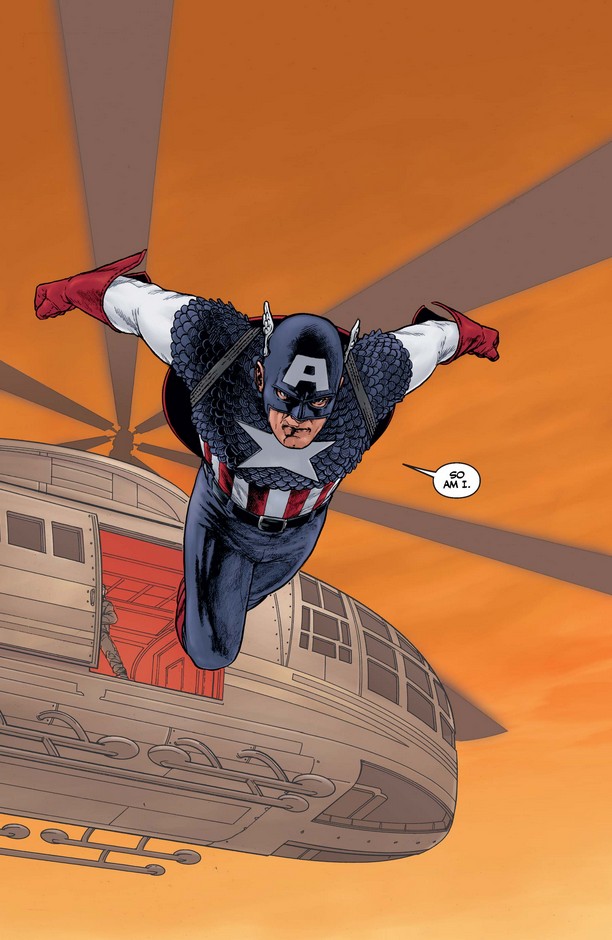
After dropping his CATtag and jumping out of the plane without a parachute—one of my favorite moves—Cap makes an ominous assertion, hopefully just expressing his rage and frustration and not conceding control to them.
As he lands, Cap thinks about how terrorists have made the traditional rules of war obsolete…
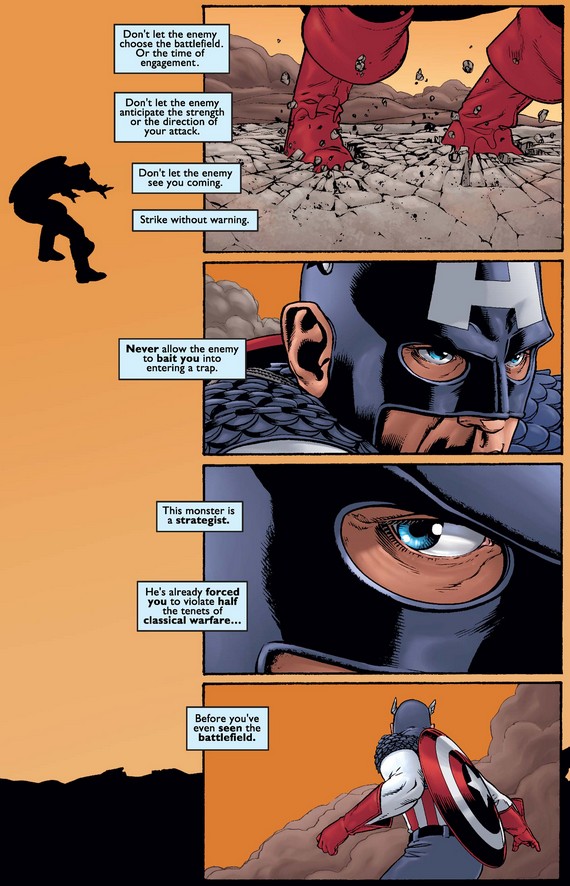
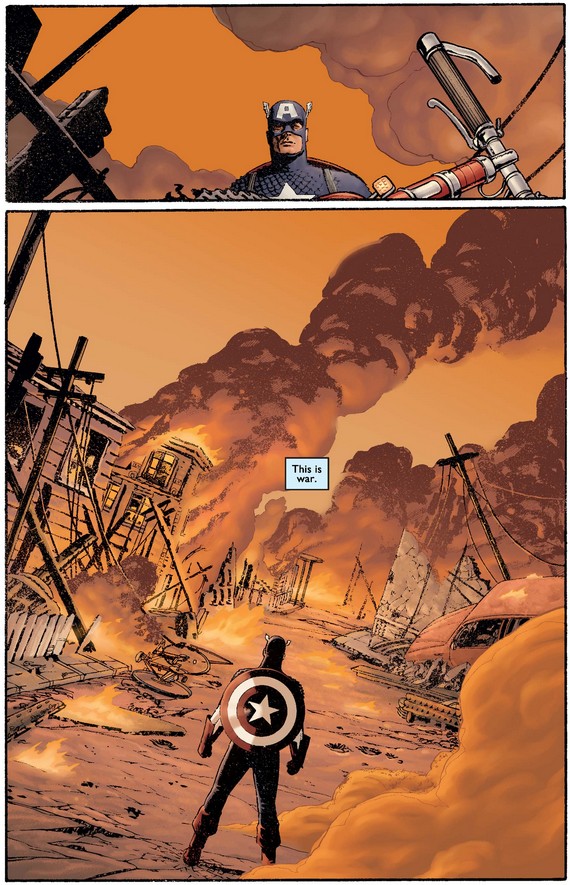
…and, after seeing the results of the explosives so far, affirms that, despite its modern face, this is still war.
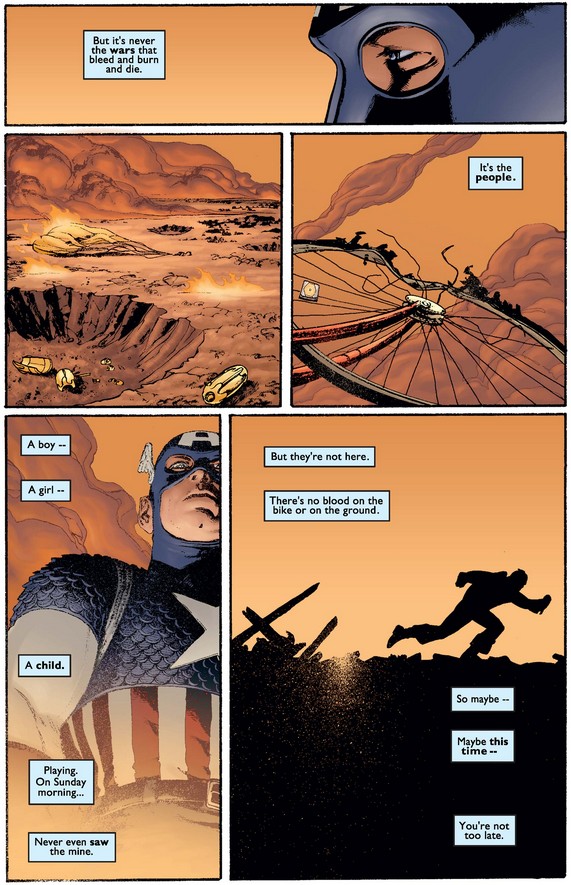
He reflects on the victims of war and is heartened by the absence of any signs of them here, thinking that he might have a chance to redeem himself for what he likely feels are his failures from last September.
As he approaches a car, he hopes for the same…
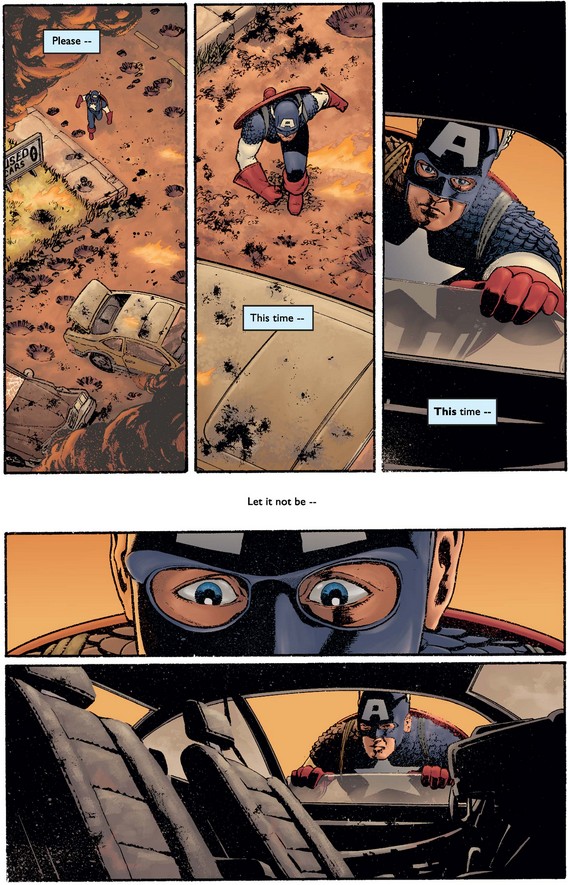
…but we have to assume his hopes were thwarted, leading to activation of his iron resolve.
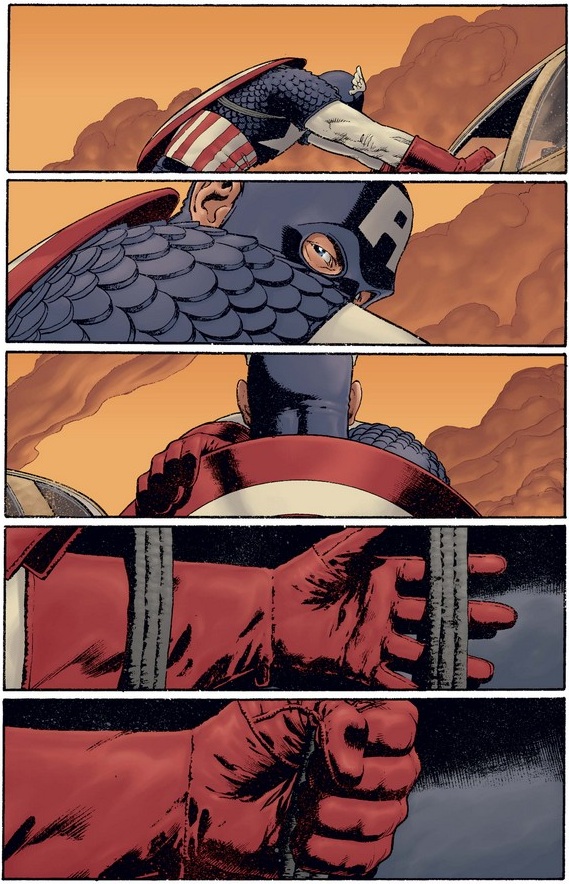
As he runs into the fire, Cap affirms that this time, he is not too late to save lives, and he will do better.
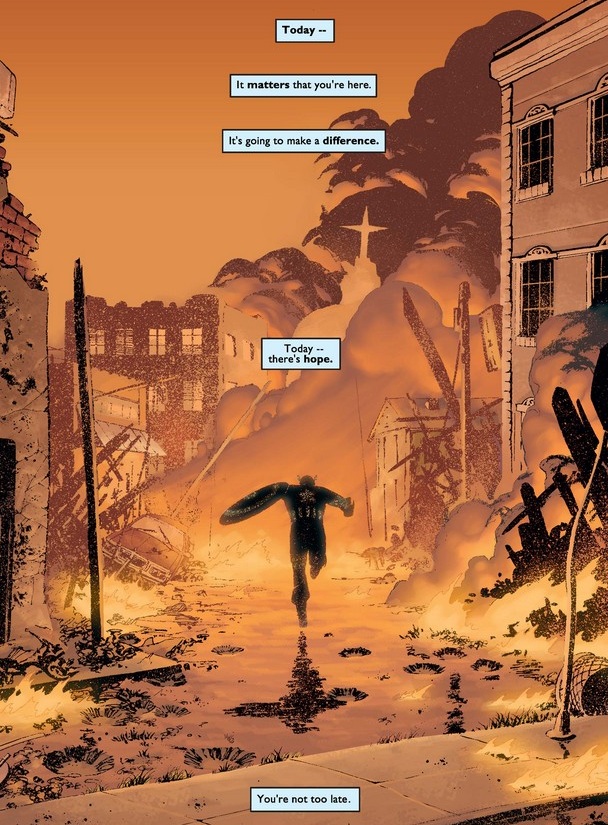
Be sure to come back for the next issue as Cap confronts a new type of warfare… and, for the first time, at home.
ISSUE DETAILS
Captain America (vol. 4) #1, June 2002: John Ney Reiber (writer), John Cassaday (pencils and inks), Dave Stewart (colors), Richard Starkings and Wes Abbott (letters). (More details at Marvel Database.)
Collected in: Captain America Marvel Knights Volume 1.
ALSO THIS MONTH: Avengers #53 and The Order #3 (June 2002)
NEXT ISSUE: Captain America #2 (July 2002)


I like Reiber’s realistic summation of Cap for the war on terror. His run is kind of metaphorical (e.g. “Centerville”) but realistically told.
Even though he’s an uber-realistic Cap during one of the darkest times in American history, Reiber’s Cap remains true to the character’s basic tenets. He maintained the old Cap for a new era. He even makes those Cap speeches I love- but they’re in his monologue to the reader as opposed to being given to the other characters in the story.
That encounter at the towers between Cap and Nick sums up Cap’s priorities- helping/saving people before bringing perpetrators to justice. Both are important, but people’s lives take precedence. Also, the encounter with the man who lost Jenny in the towers sums up another Cap priority- justice not vengeance. Great moments in a truly great issue.
Throughout this issue Cap makes the point that people have to strive to rise above their circumstances, above their own pain-so as not to become the very thing that hurt them. It becomes the theme of the subsequent story arc.
The only thing I would quibble with in this issue is that thing you love Doc- Cap jumping out of a plane without a parachute. He’s peak human and peak humans still die falling out of airplanes without parachutes. Not a realistic moment in an otherwise very realistic tale.
And John Cassaday’s art is just fantastic! ‘Nuff said.
When Cap says “We have to be America” what does that mean to the reader? To me, steeped in the long history of Cap and in the history of the Great Depression and war against fascism that formed him, it means the America of the New Deal and the America that believes in liberty and Justice for ALL. An anti-fascist America that believes in FDR’s Four Freedoms: Freedom from Fear and Want & Freedom of Religion and Speech.
Cap says that if we aren’t this America (the America he represents) then we’ve lost. As we stand a quarter of a century from the events in this story you have to wonder if we didn’t lose.
LikeLike