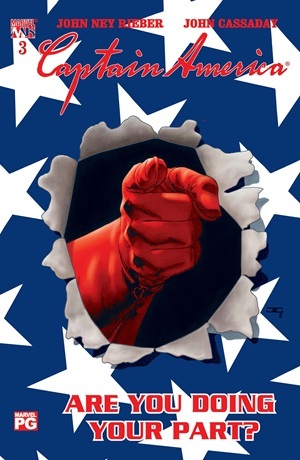
 This issues wraps up the first half of the first arc of the fourth volume of Captain America, which began with our hero reacting to the tragic events of September 11, 2001, before moving several months ahead to another incident in the town of Centerville, which we learn in this issue is the location of a munitions plant. A terrorist named al-Tariq is holding many of the town’s residents hostage in their church and has demanded to see Captain America—who arrived there and, as of the end of the last issue, faced four small armed children broadcasting al-Tariq’s voice, which is where we first see in this issue.
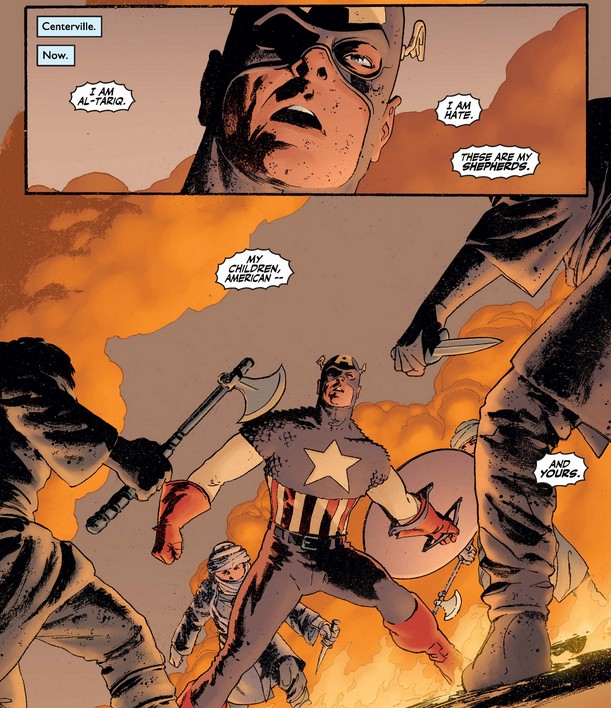
Cap asserts his disgust with al-Tariq’s tactics and defends himself against children with deadly weapons and intent, while being careful not to hurt them.
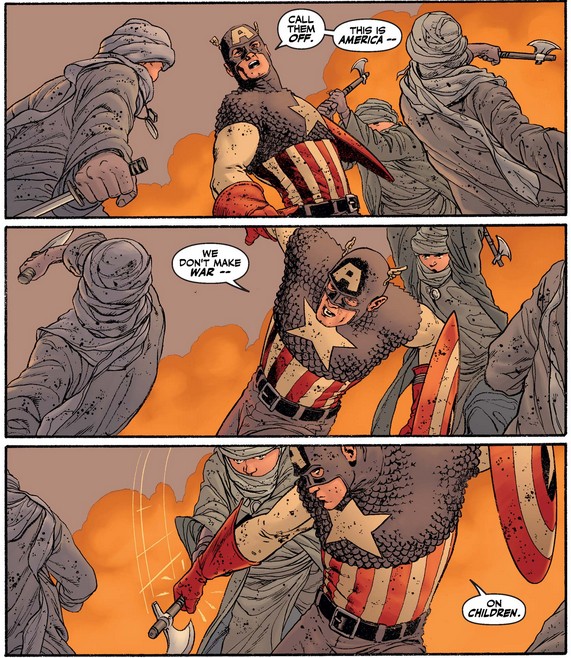
Oddly, Cap didn’t say we don’t make war with children but on them, opening the door for al-Tariq to point out what he claims the US did to his children.
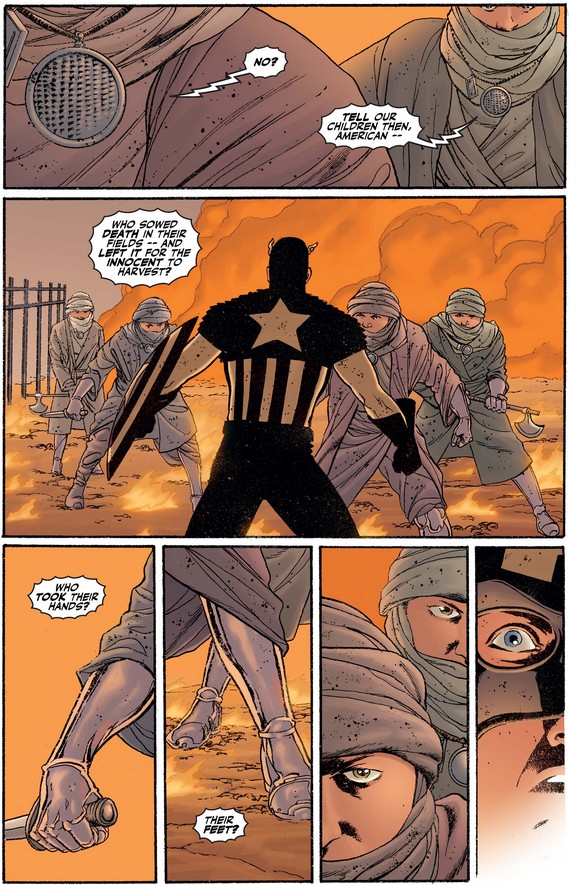
Cap immediately recognizes and laments what happened to the children, similar to the scene he saw when he arrived at Centerville (shown in the second row below), and is forced to remind himself to focus on the battle at hand.
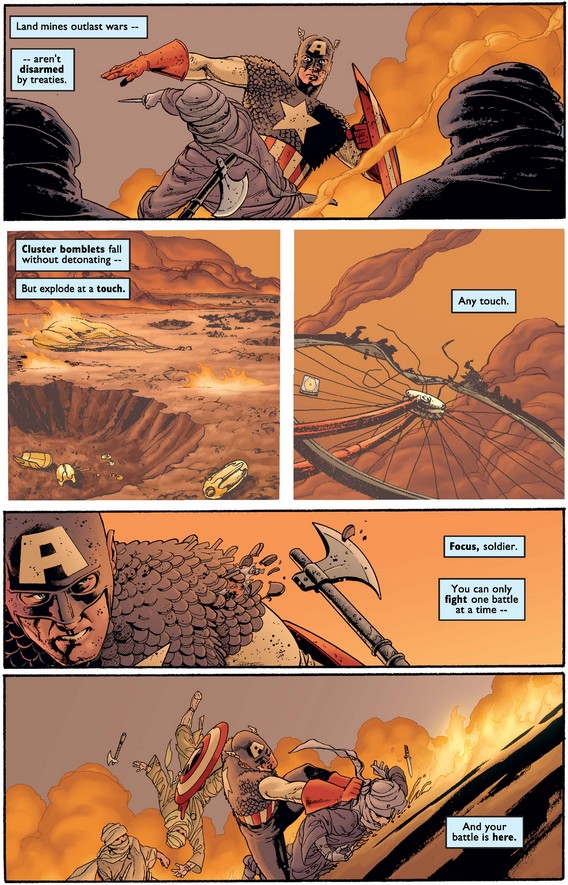
He pleads with one of the children to stand down, but another ambushes him from behind…
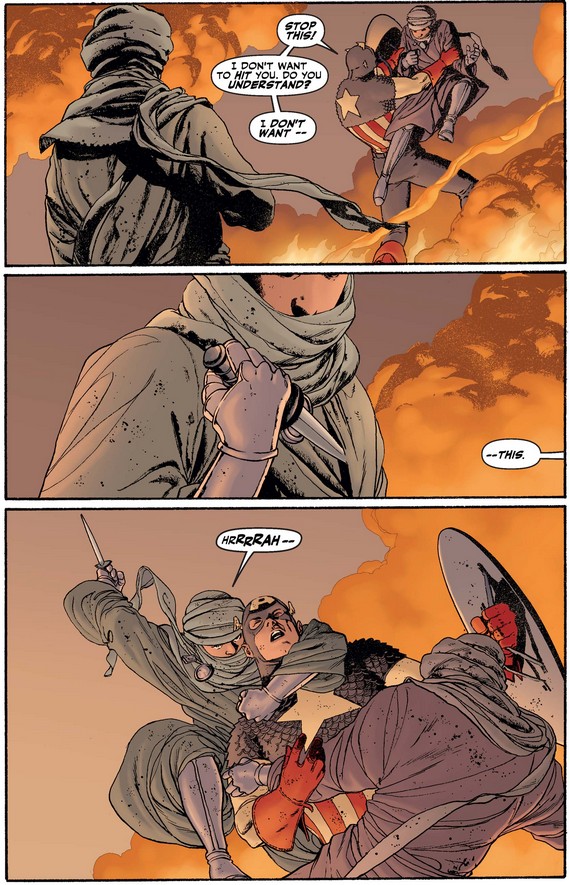
…before a third goes even farther for his “cause.”
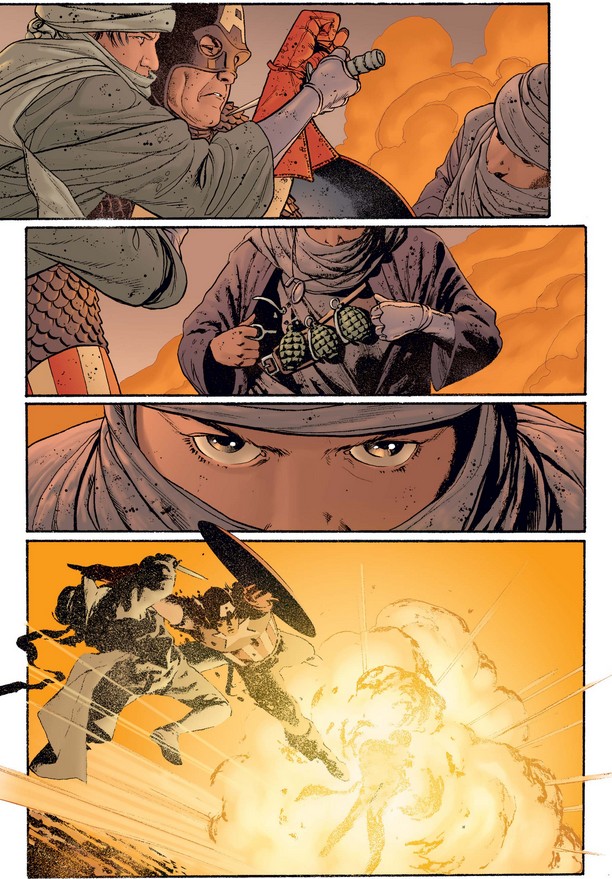
When the child who tried to kill Cap realizes he was saved by him, he starts to question what and who he is fighting for.
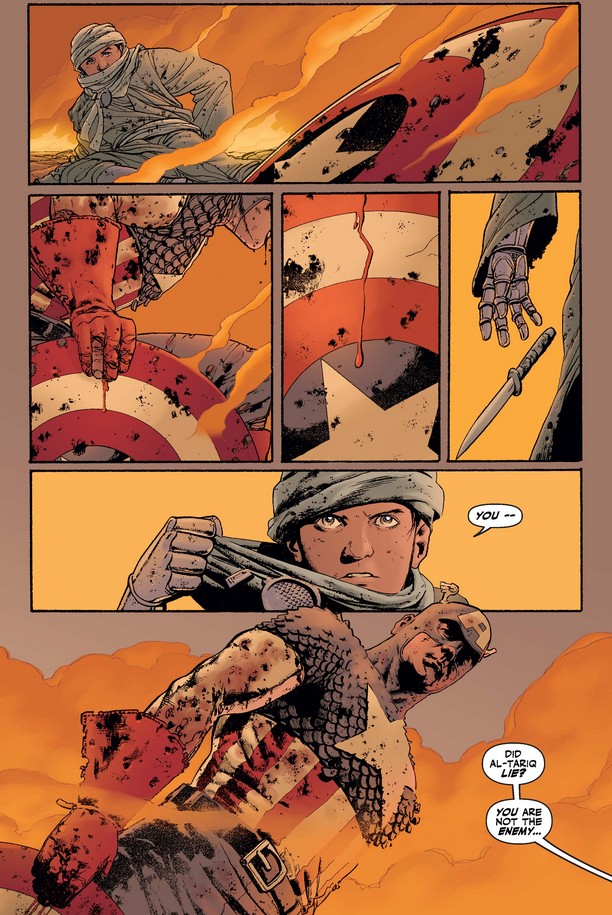
Before Cap can respond, he kneels over the body of the boy who killed himself and finds a CATtag similar to the one Nick Fury tried to give him in the first issue.
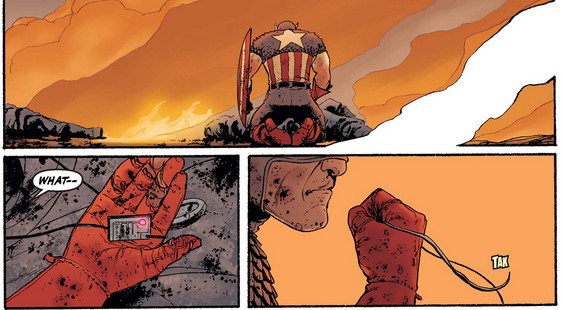
Before he heads into the church, Cap assures the boy that neither he nor the Centervillians—OK, maybe not the best word—are his enemy, to which the boy responds with a warning.
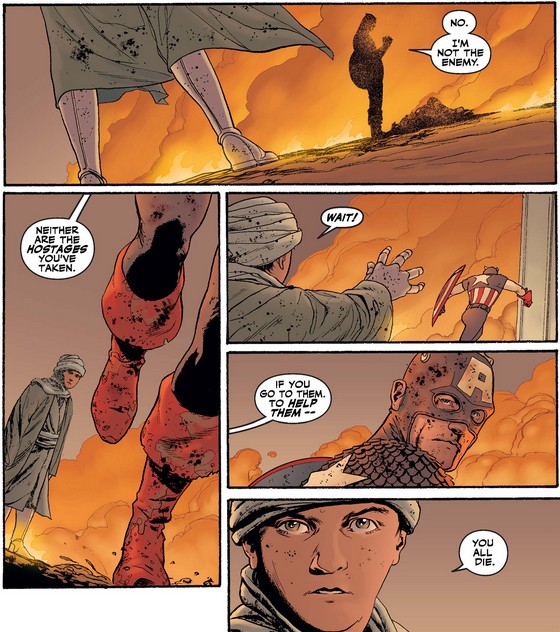
(Thank you, young Tobey Maguire!)
As the television reporter we met in the last issue makes the stakes of the current situation clear, Cap reflects on the fact that we often do not have enough time to do all the things we feel we should—including checking rubble for possible survivors.
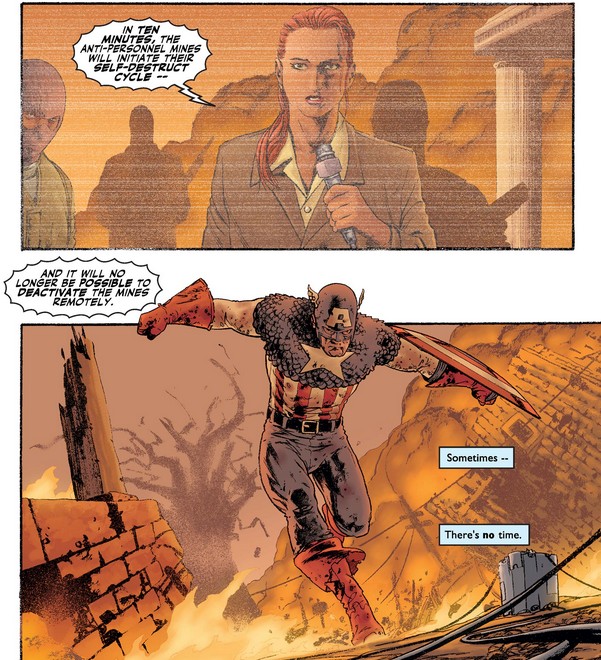
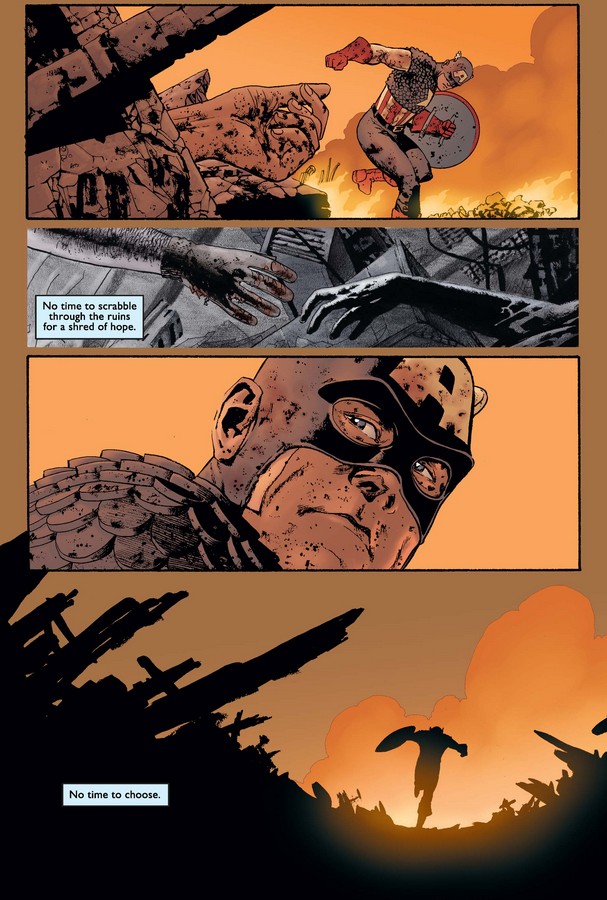
His thoughts transition from time to one of its best uses, choice, and how it is not only time that can rob you of it.
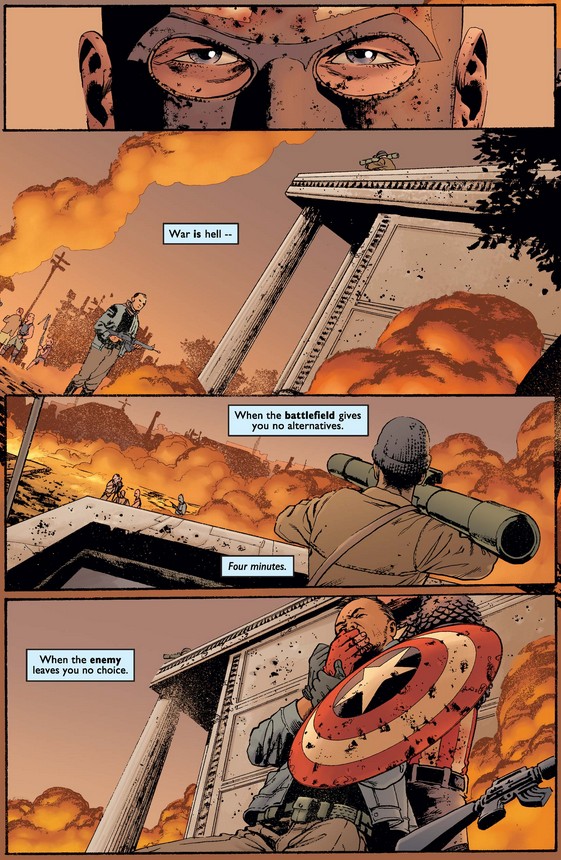
As he gets closer to the church, Cap asks himself why America is hated, whether out of jealousy, resentment, or revenge, before recalling that there is no time for questions like this either and only one thing matters.
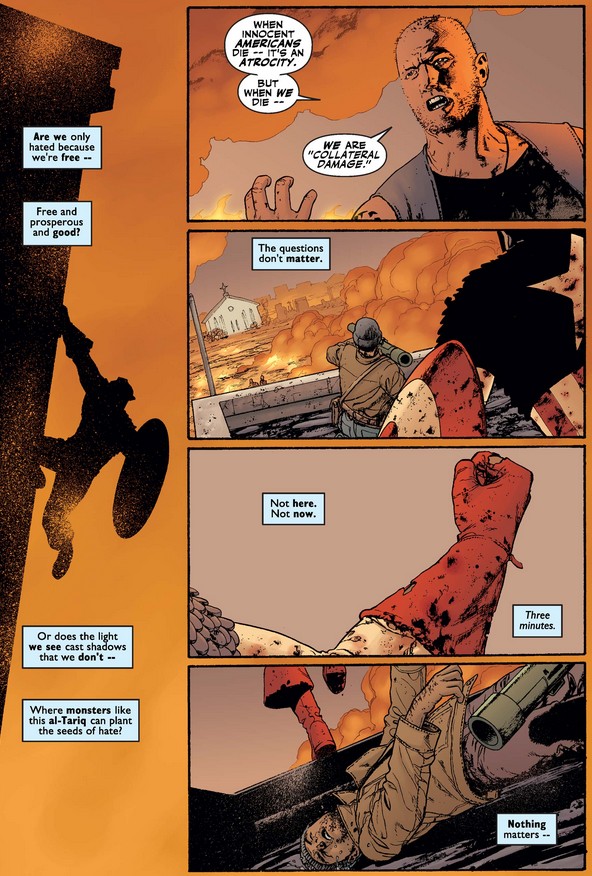
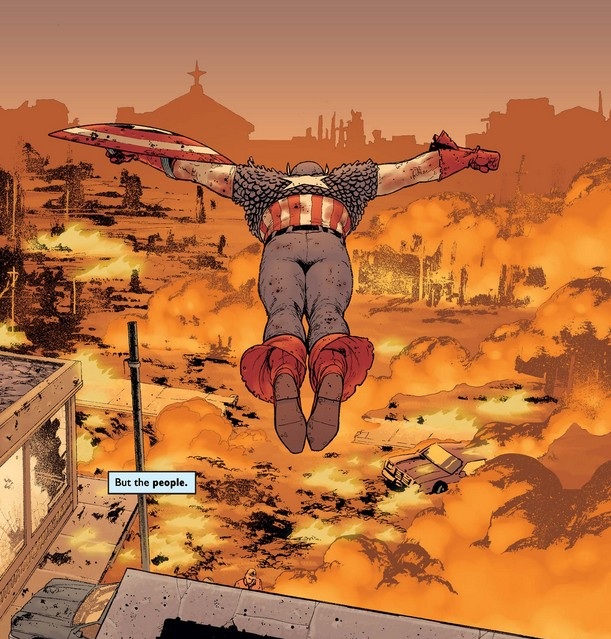
Al-Tariq continues his monologue on the double standard on justice between Americans and his people, but Cap makes an important correction…
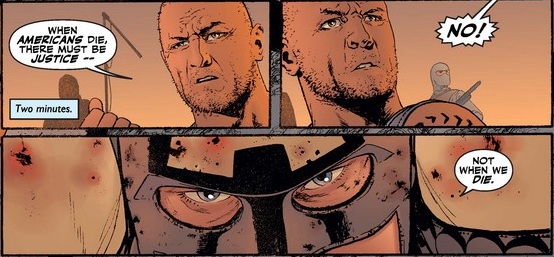
…that justice is not only a post mortem concern. Cap then finds himself once again battling against time…
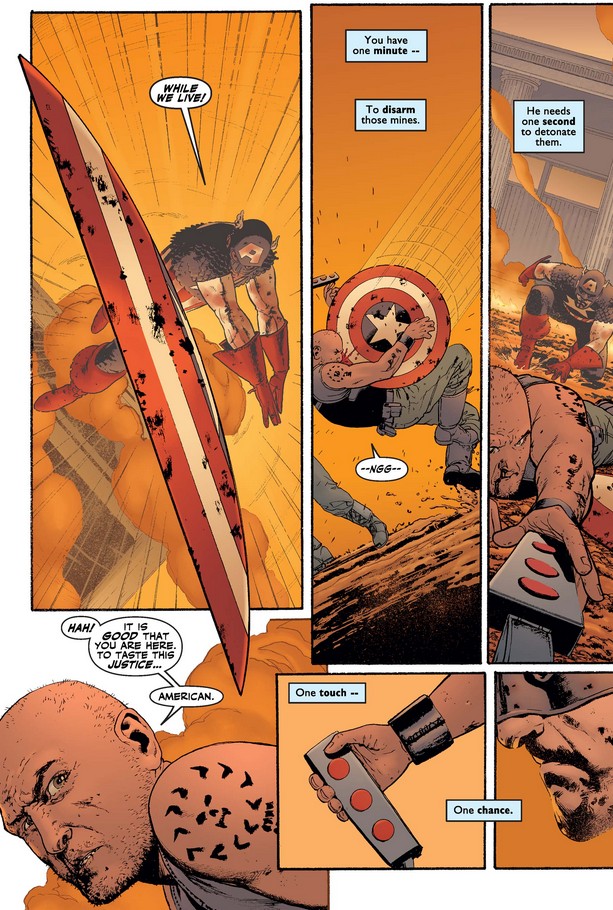
…and once again prevailing, preventing the detonation with one mighty punch.
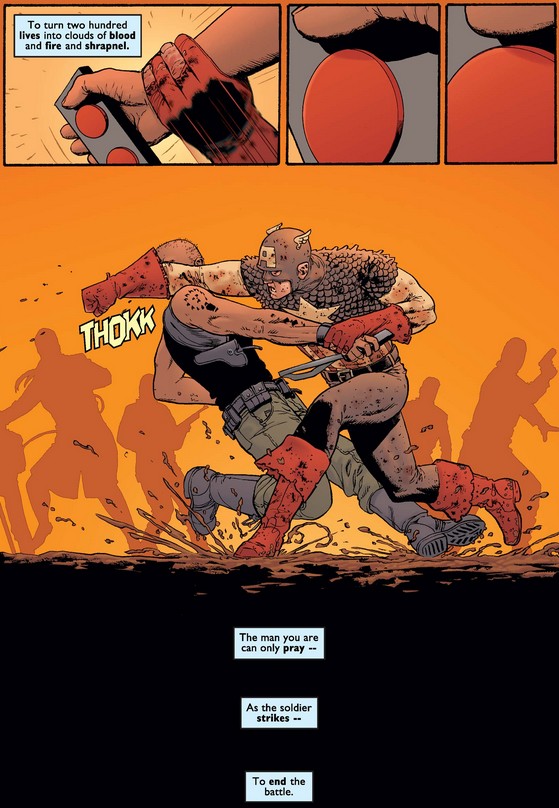
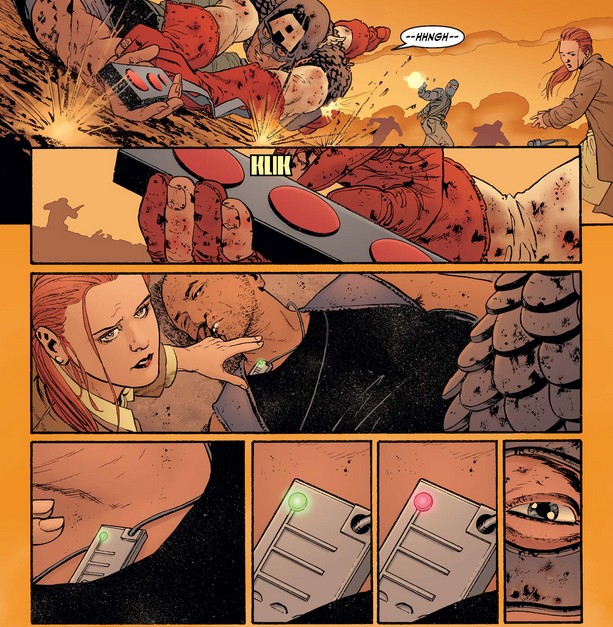
After he disarms the bombs, Cap watches the CATtag around al-Tariq’s neck go red as he dies.
After taking a moment, Cap tells the reporter to let the hostages know they can go…
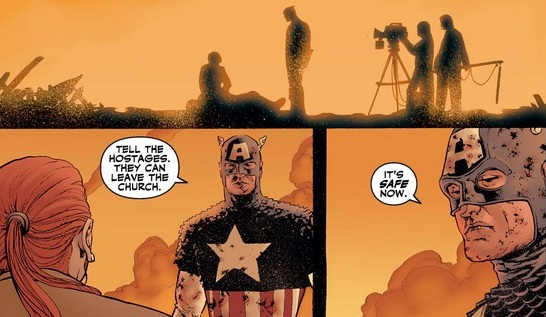
…before turning to the TV camera to speak about the hate on display this day.
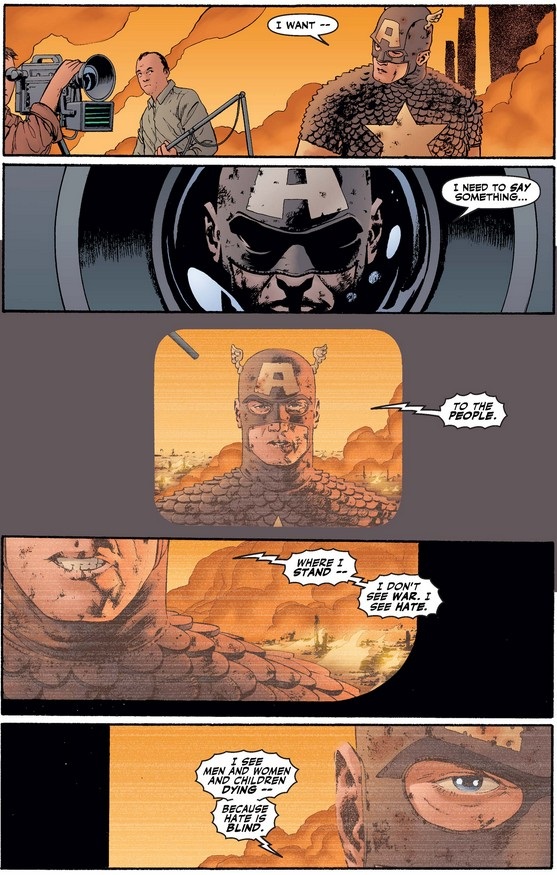
After criticizing the idea of wrongly replacing individual responsibility with collective responsibility—which applies just as well to the bystander’s reaction to the Middle Eastern man in issue #1 as to al-Tariq’s desire for revenge against America—Cap makes sure it doesn’t happen this time.
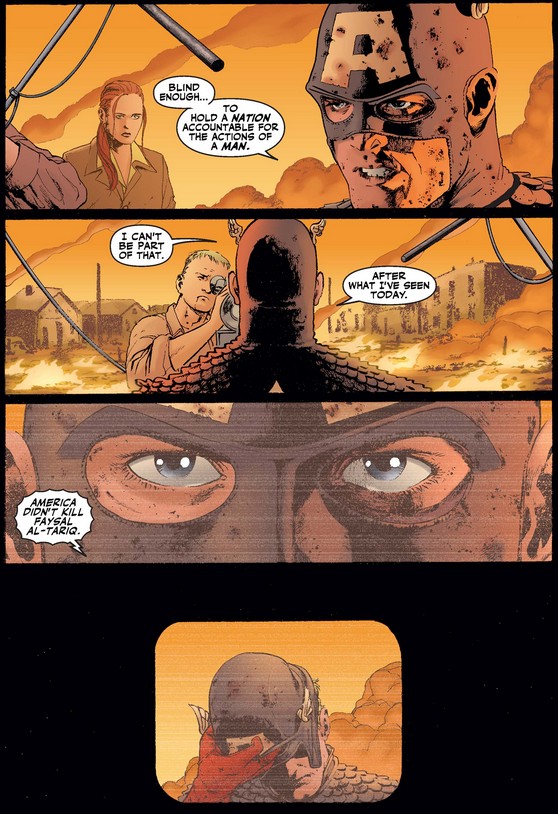
Not only does he take personal responsibility for al-Tariq’s death, but he does it, not as the symbol of a nation, but as one man, Steve Rogers.
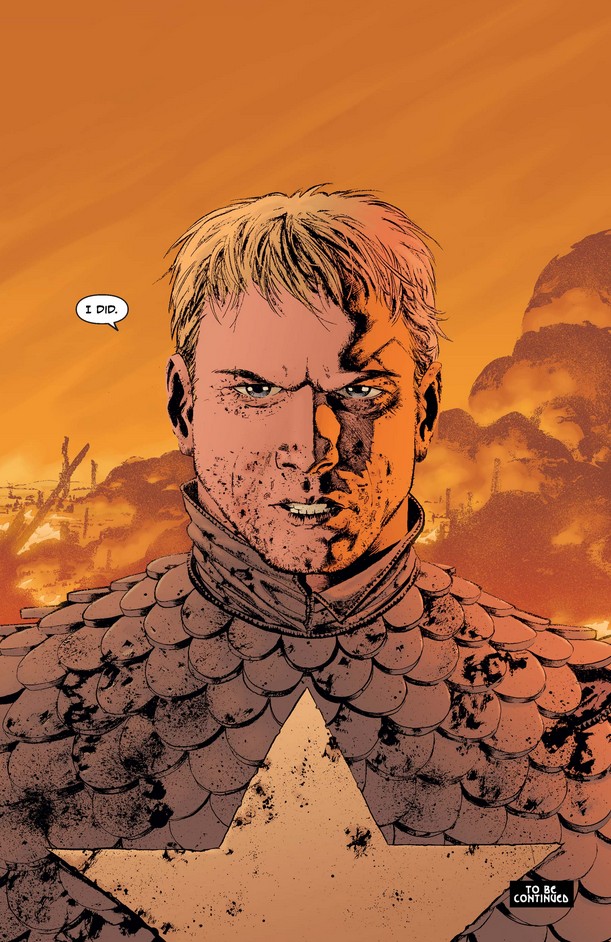
(Keep in mind that his identity was still a secret at this point.)
Come back for the next issue to see the fallout from this shocking admission and revelation.
ISSUE DETAILS
Captain America (vol. 4) #3, August 2002: John Ney Reiber (writer), John Cassaday (pencils and inks), Dave Stewart (colors), Richard Starkings and Wes Abbott (letters). (More details at Marvel Database.)
Collected in: Captain America Marvel Knights Volume 1.
LAST ISSUE: Captain America #2 (July 2002)
ALSO THIS MONTH: Avengers #55, Tigra #4, and Infinity Abyss #1 (August 2002)
NEXT ISSUE: Captain America #4 (September 2002)


Some nice honesty in this issue about who gets hurt in warfare.
Could Cap really have believed he killed that guy? Unlikely. How many times has he knocked someone unconscious with a punch without killing them? Thousands? At this point in his history Cap certainly wouldn’t use unnecessary lethal force when just knocking someone out would accomplish the same result.
Of course if the writers had him think “Why is he dead? I didn’t hit him that hard!” It would give away too much about a big plot mystery way too early in the story…
LikeLike