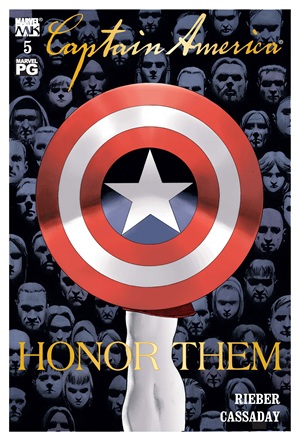
 This issue finds Captain America pondering the nature and purpose of modern warfare, the lengths nations go to advance in war, and the role of military technology—including himself—as the aftermath of his fatal interaction with the terrorist Faysal al Tariq in the small town of Centerville continues.
At the end of the last issue, Cap jumped off a dam over the Potomac River outside Washington, DC, as armed terrorists rushed him from both sides, and one hit him with a small missile as he fell into the water. Below, we see them expecting our hero to be dead, but we know better.
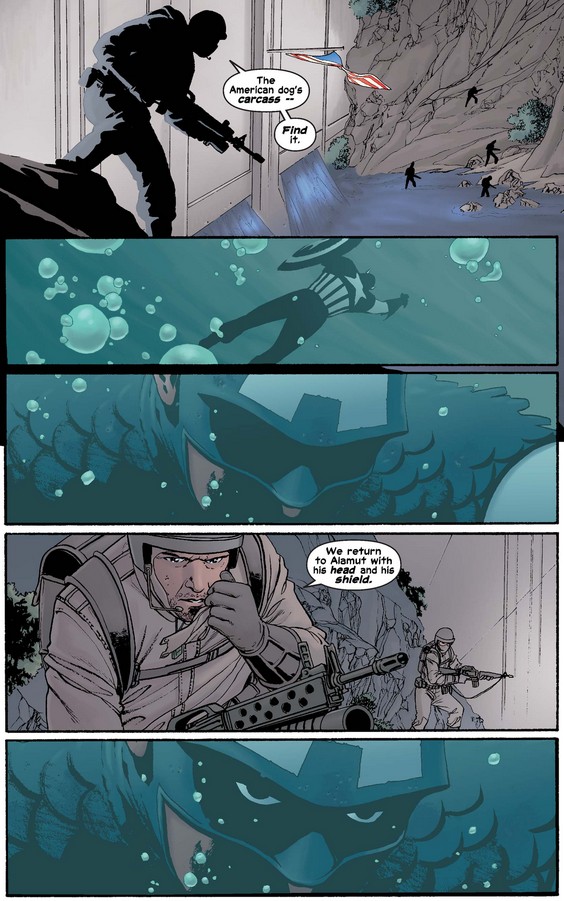
While he holds onto his last breath, Cap puts the pain away, confirms his main objective, and prepares for his next step.
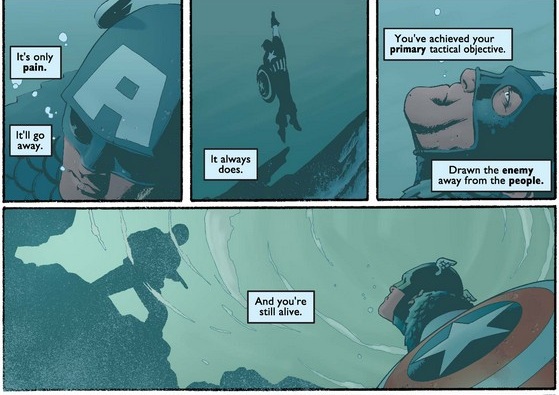
After he emerges from the river and assures his enemies he’s ready…
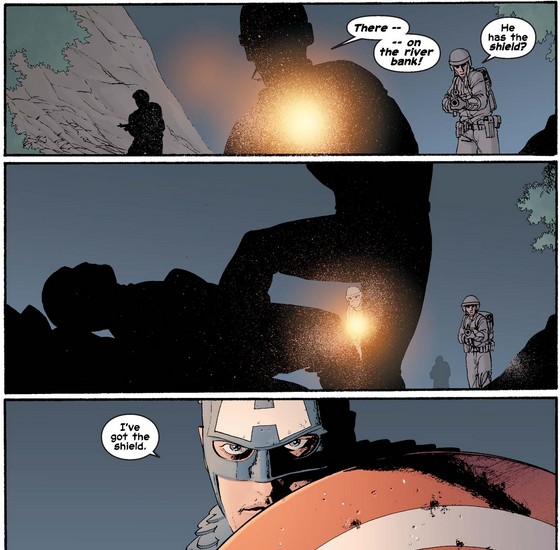
…he engages while launching an internal monologue about the relatively modern phenomena of terrorism and traditional conceptions of war.
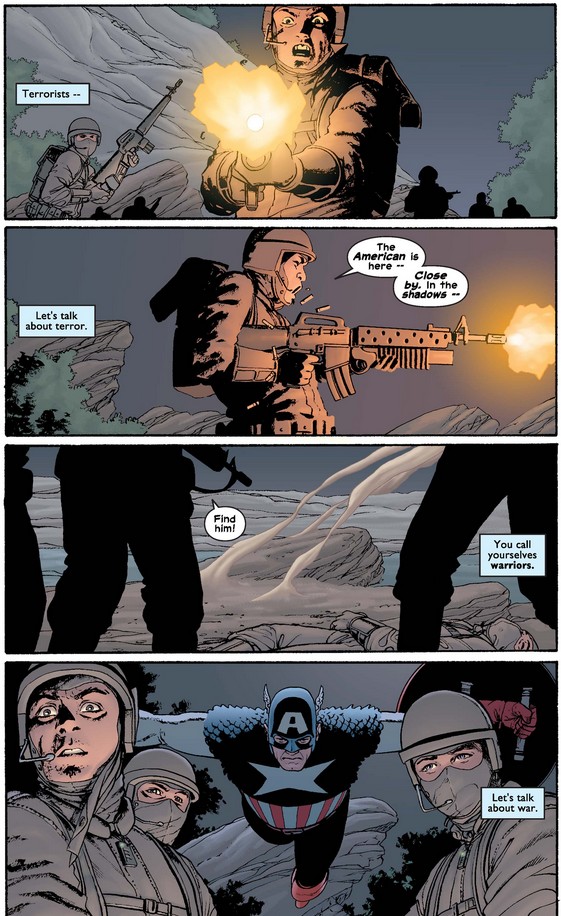
Sadly, we don’t hear more on this right away, although we can imagine it has to do with the way terrorism focuses on civilian populations rather than engaging with military combatants, which he does address soon—with Cap demonstrating the latter below.
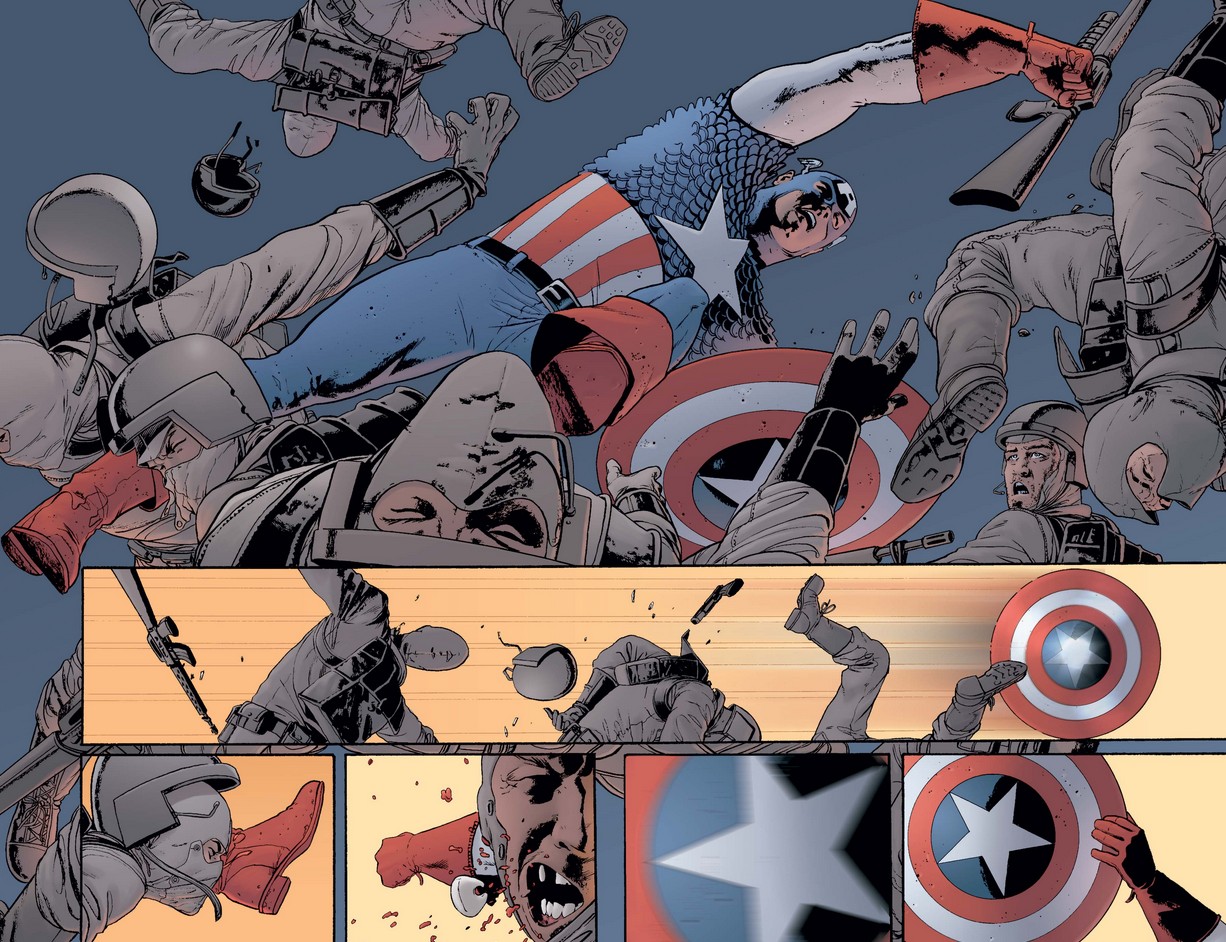
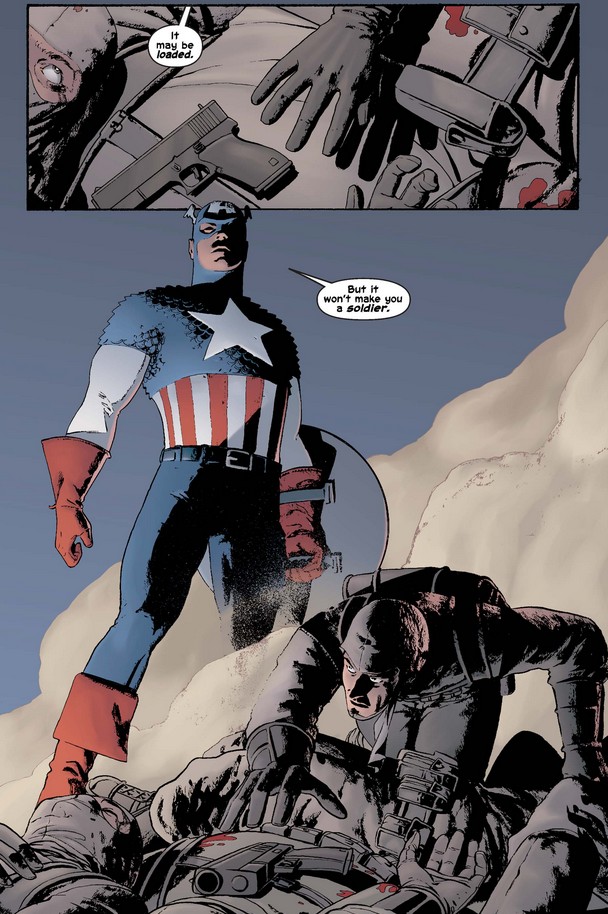
One of the terrorists kills two of his colleagues trying to get at Cap before he runs out of ammo. He soon sees another gun, but someone else sees him sees it…
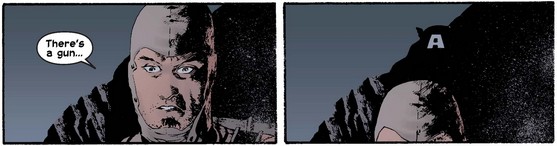
…and notes that there’s more to being a soldier than knowing how to kill.
Cap confronts the terrorist with what he did and then takes issue with his dishonorable reaction.
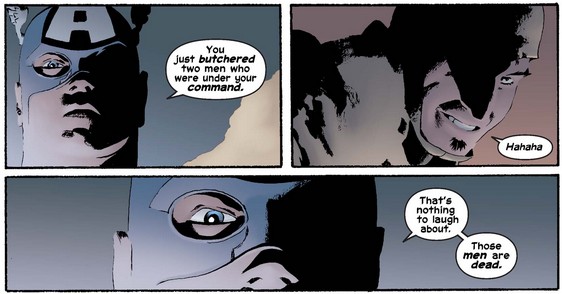
As he holds his CATtag, the terrorist boasts that he and his fellow “Assassins” (based on the history and legends of assassination among the Ismaili who operated out of Alamut Castle in Iran) cannot be killed before invoking his “Master.”
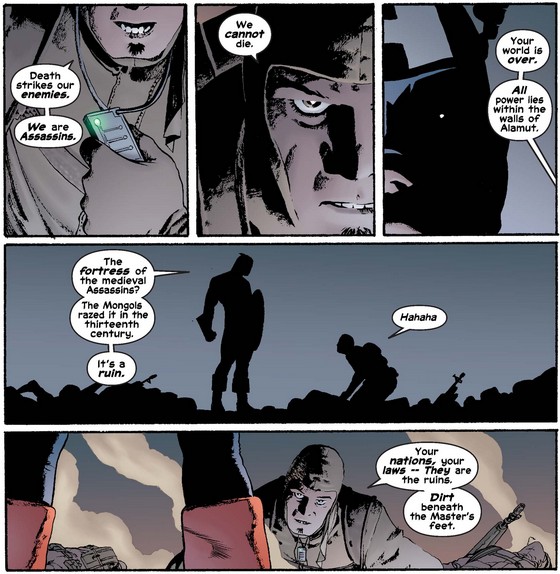
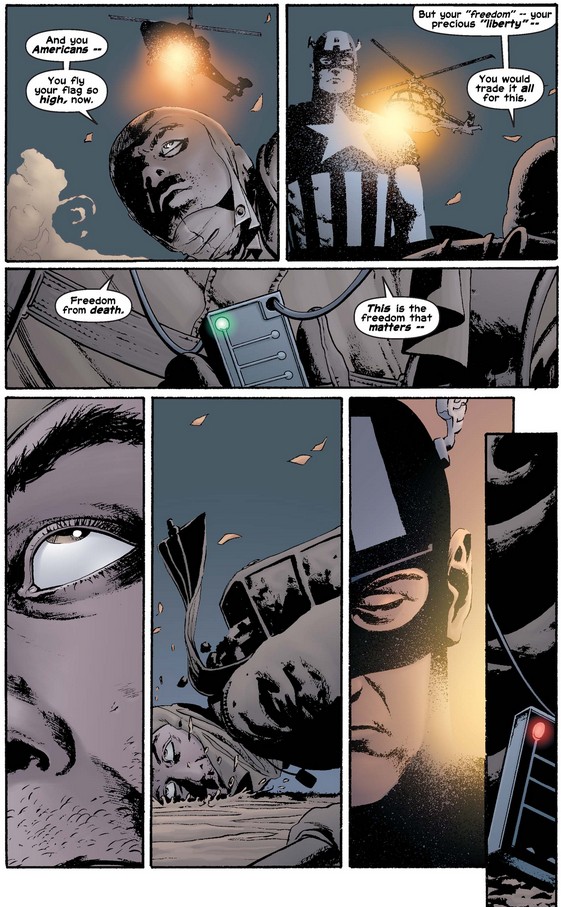
Like so many of Cap’s ideological foes, the terrorist claims that Americans would happily give up their illusions of freedom for a greater good, in this case immortality… just before he dies and his the light on his CATtag goes red.
When he arrives, Fury compliments Cap’s timing and plans to get more information out of the terrorist. After Nick realizes the man is dead, Cap asks a pivotal question (that also applies to the death of al-Tariq earlier).
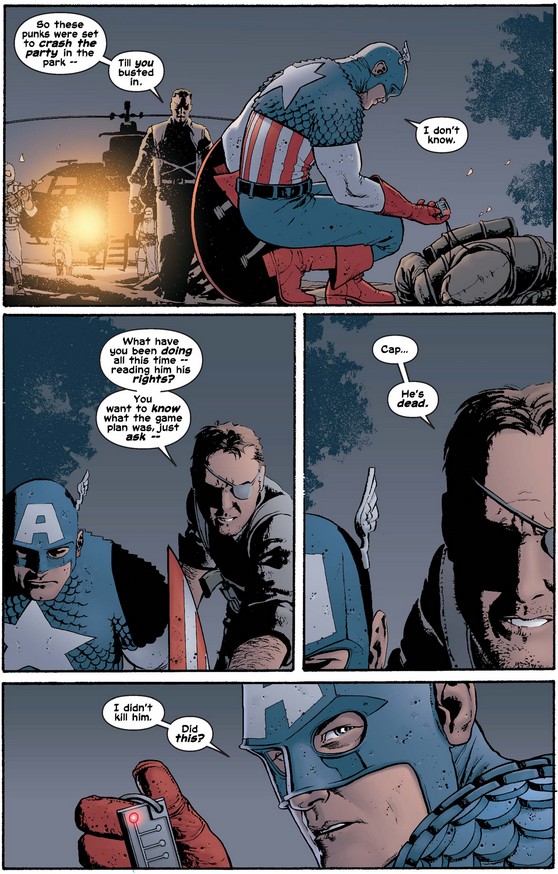
Cap confronts Fury over the hidden features of the CATtags as well as their true purpose, guessing that they’re essentially kill switches. Fury doesn’t deny anything, merely claiming that the “good guys” need to keep up with any “advantage” the bad guys have, regardless of any moral issues with it.
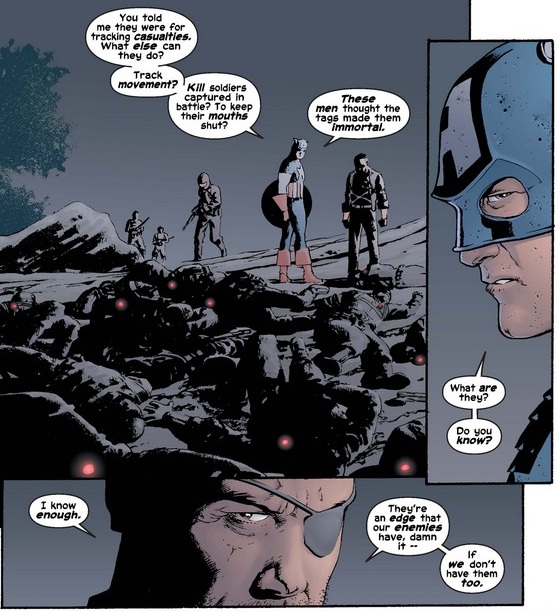
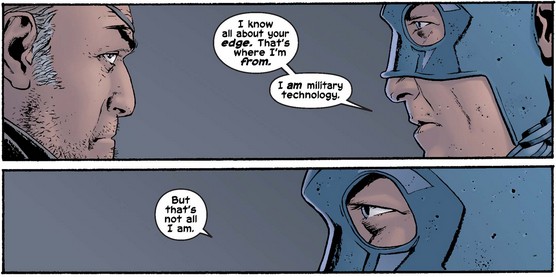
Cap knows this idea all too well, but reminds Fury that tools are only as good as the person who wields them (or, in his case, embodies them).
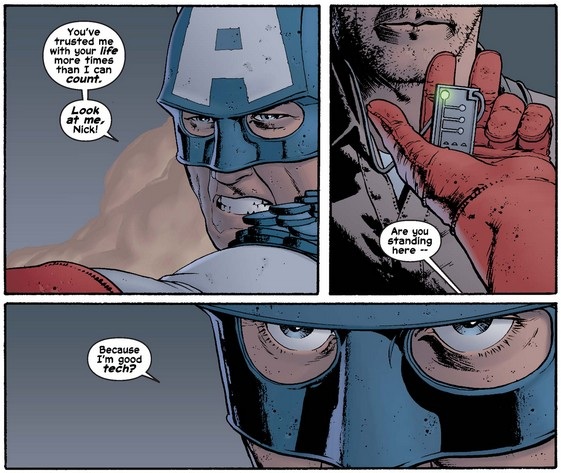
Much of the dialogue in this storyline lends itself to many interpretations, including Cap’s words below. Maybe Cap is accusing Nick of trusting him all these years simply because he has been judged to be “good tech” rather than a good man, but the way Cap is holding the CATtag makes me think he is suggesting that Nick is alive—that is, hasn’t been killed by his superiors—because they trust in him as good tech (and useful for their purposes).
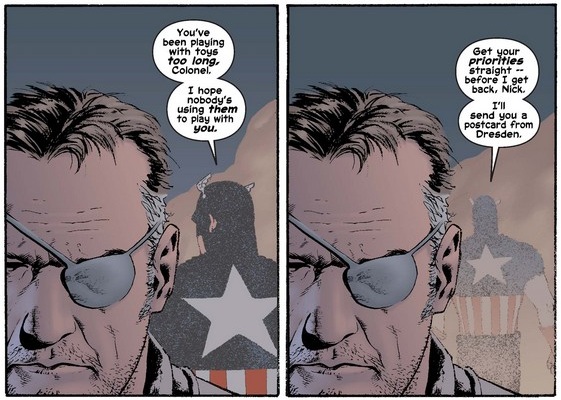
Cap urges Nick to think about this while he leaves for Dresden, the address on the piece of paper Nick gave him in the last issue to help him investigate the source of the CATtags and how they ended up in the hands of both SHIELD and the terrorists.
On the flight to Dresden, Steve Rogers is recognized by his seatmate, a young German woman whose story about him and her grandfather in the war is slightly different than most (even if Cap did save his life, albeit in an unusual way).
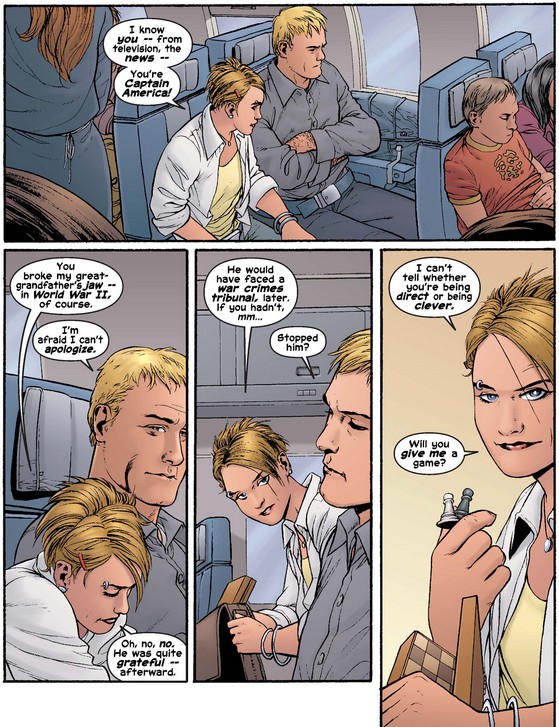
As they play chess, the young woman asks his impressions of “the war,” by which she means “the war on terror” and on which she has some opinions, including about his (or Americans’) beliefs about it.
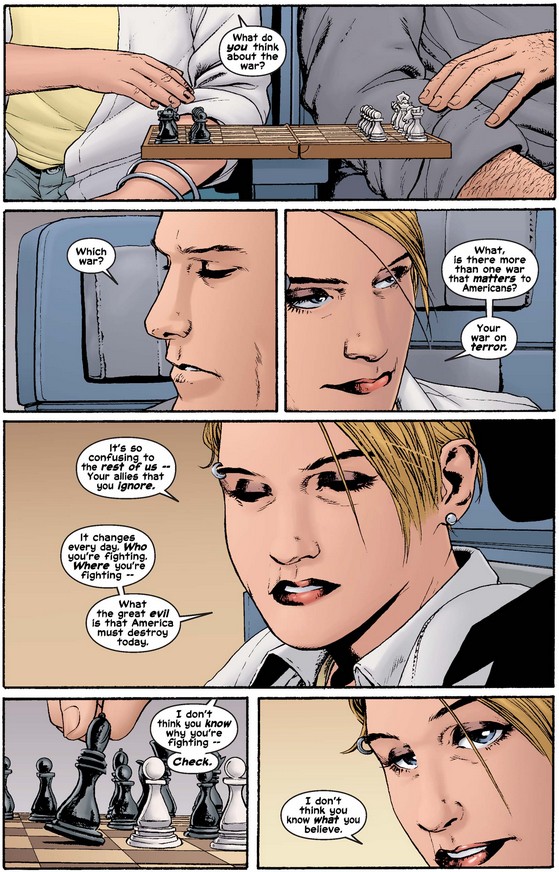
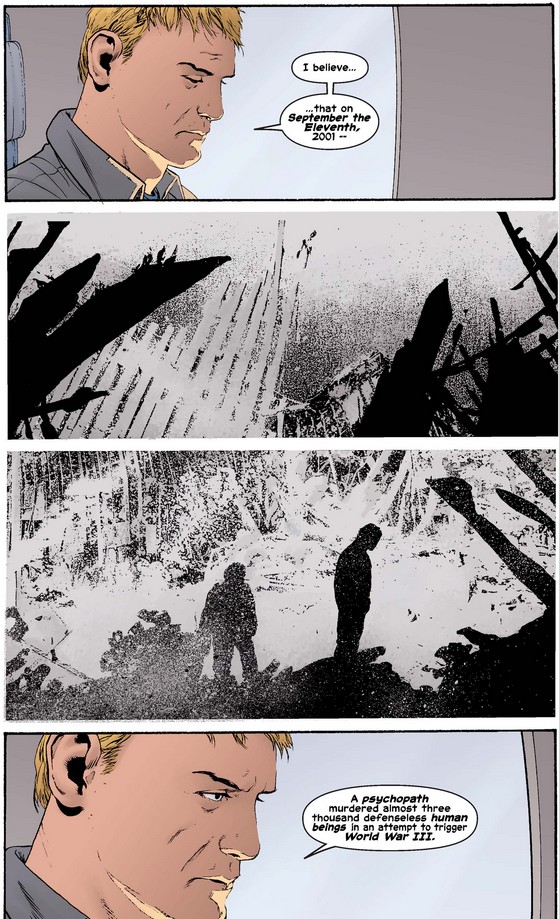
Steve starts his response by recalling the aftermath of the previous September 11 (as seen in issue #1)…
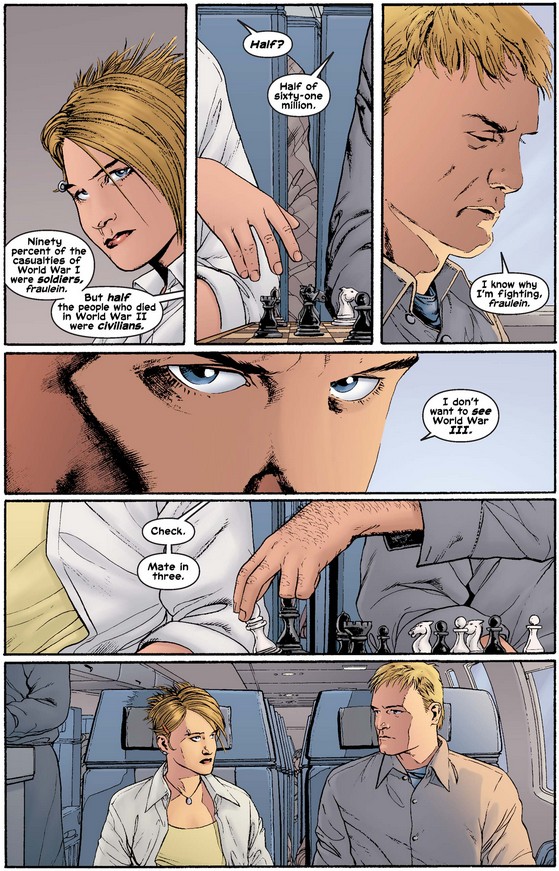
…and uses the trend in 20th century warfare to explain why he wants to prevent a 21st century one. (Winning the game is just the cherry on top.)
When he arrives in Dresden, Steve recalls the Allies’ firebombing raid in February 1945 that killed around 25,000 Germans, the purpose and rationale of which is still debated today (much like the bombing of Hiroshima and Nagasaki, which Cap has questioned before).
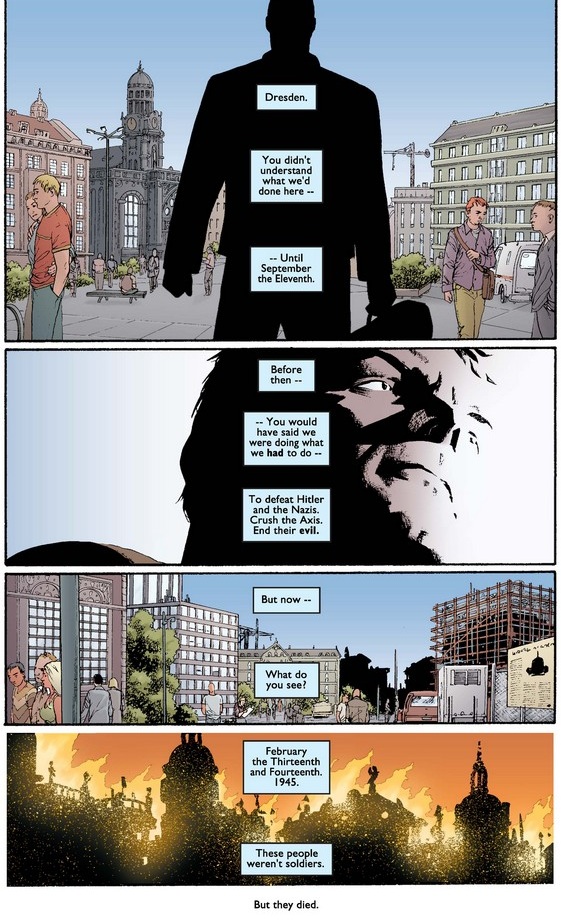
He thinks of all the civilians who were killed in the most torturous fashion…
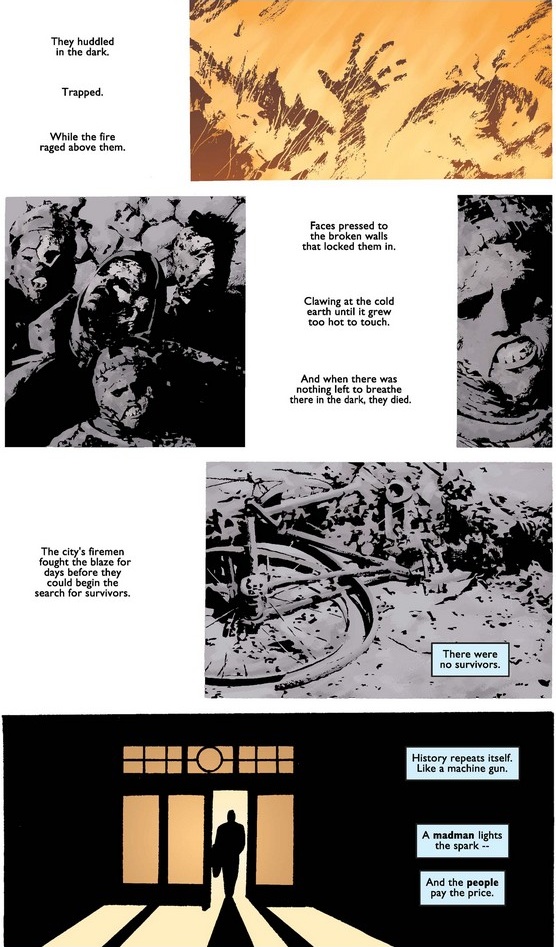
…and even though he puts most of the blame on Hitler himself, he notes that it is rarely the war pigs who suffer from the decisions they make.
Steve finds the facility where the CATtags are manufactured, but it seems he was expected.
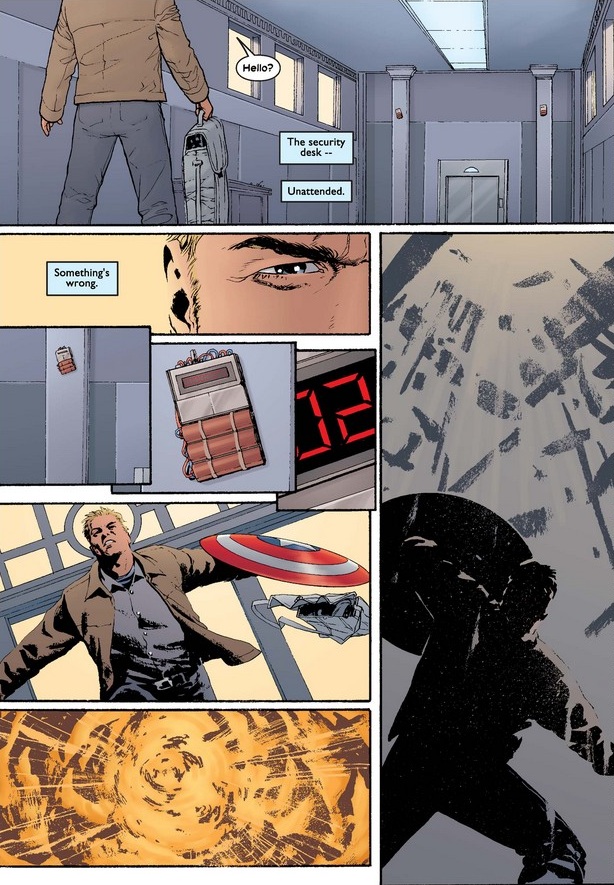
We’ll see why his greeting was so unpleasant in the next issue, which concludes this storyline.
ISSUE DETAILS
Captain America (vol. 4) #5, October 2002: John Ney Reiber (writer), John Cassaday (pencils and inks), Dave Stewart (colors), Wes Abbott (letters). (More details at Marvel Database.)
Collected in: Captain America Marvel Knights Volume 1.
LAST ISSUE: Captain America #4 (September 2002)
ALSO THIS MONTH: Avengers #57 (October 2002)
NEXT ISSUE: Captain America #6 (December 2002)
 THE VIRTUES OF CAPTAIN AMERICA
Leave a comment